Industry News
Vingroup, Alstom sign deal for 200 Hanoi metro trainsets and local production

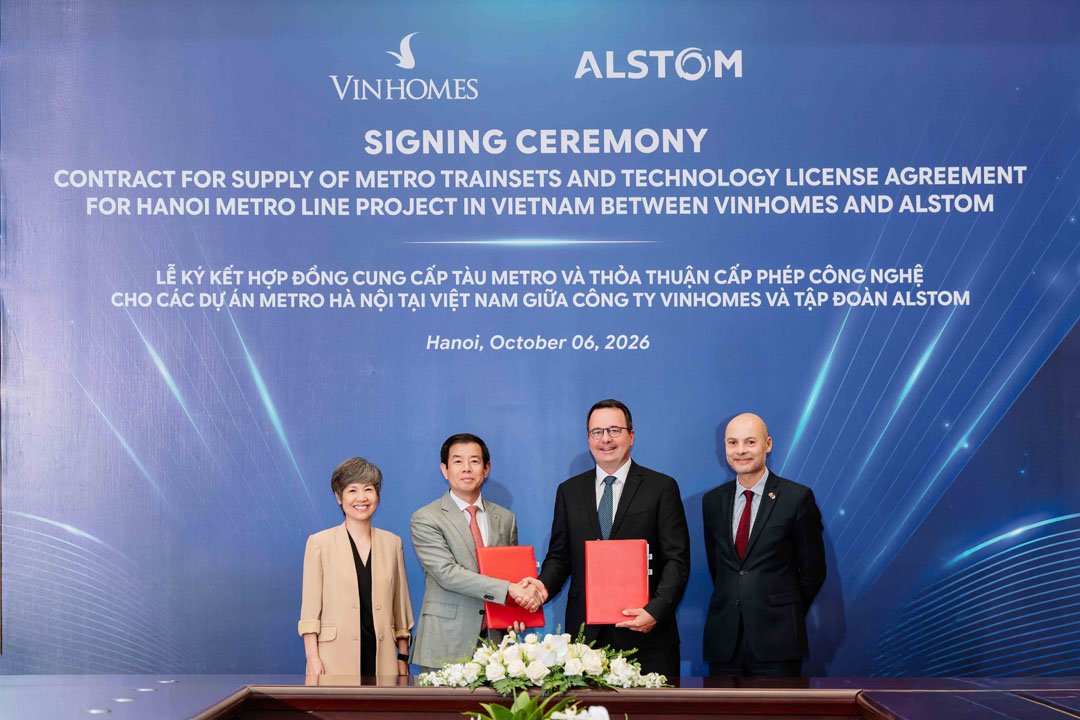
Vingroup and French rail giant Alstom have signed agreements covering 200 new metro trainsets for Hanoi, with more than half of the trains eventually set to be manufactured and assembled in Vietnam.
The rolling stock contract and Technology License Agreement will see Alstom supply its Metropolis trains for Hanoi’s expanding urban rail network while transferring manufacturing technology and expertise to Vingroup.
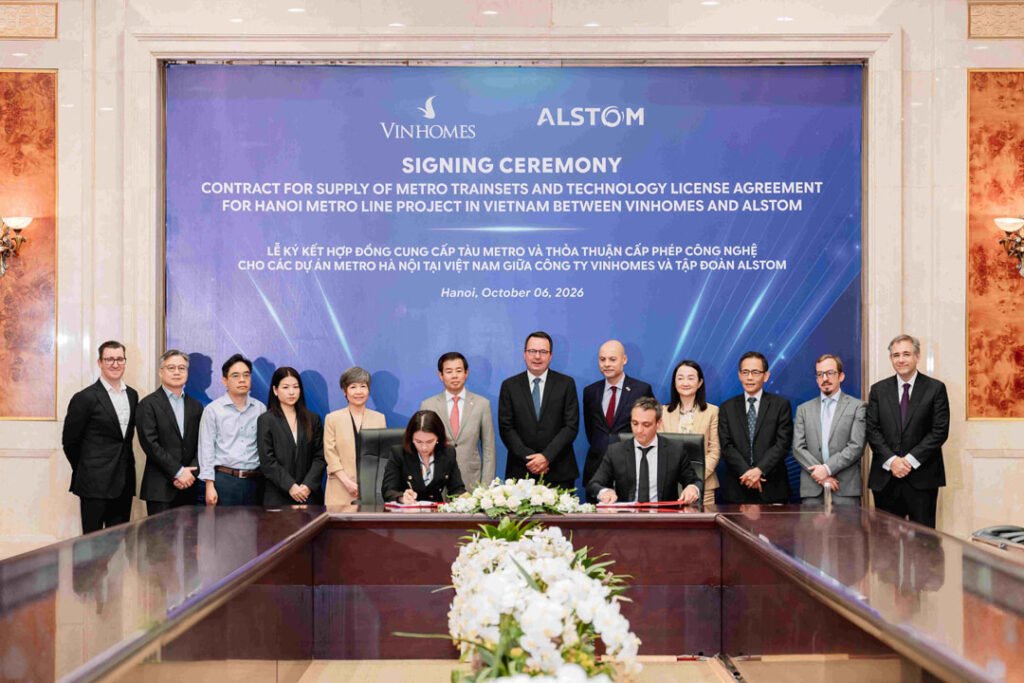
The first 83 trainsets will be designed and built at Alstom’s Valenciennes Petite-Foret facility in France. Production of the remaining 117 trainsets is planned in Vietnam as Vingroup develops local manufacturing and assembly capabilities.
Alstom will provide engineering expertise, tooling support and key components as part of the technology transfer.
Each trainset will have five cars and an aluminium body designed to reduce axle loads, energy use and track wear. A wide-body layout will provide additional passenger space.
The trains will also operate without drivers under Grade of Automation 4, or GoA4, the highest level of train automation. Their braking systems will combine regenerative and disc brakes, allowing energy to be recovered during braking.
Alstom CEO Martin Sion said the agreement combines the French company’s rail expertise with Vingroup’s industrial capabilities as Hanoi expands its metro network.
He said the partnership will also support the development of local rail manufacturing capabilities in Vietnam.
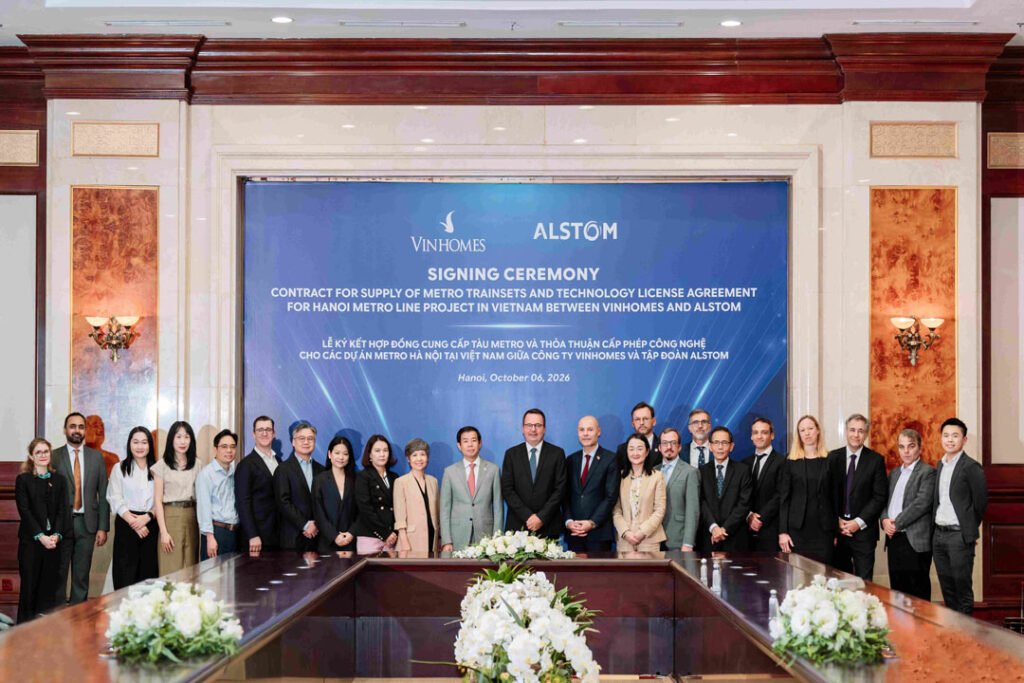
Vingroup Vice Chairman and CEO Nguyen Viet Quang said transport infrastructure, including high-speed rail and urban rail, is one of the key areas under the group’s infrastructure business.
Vingroup is serving as general contractor for Hanoi metro projects through its subsidiary Vinhomes. The Alstom partnership is intended to supply rolling stock while gradually building domestic capacity to support future rail development.
Hanoi has outlined a major expansion of its urban rail system under the city’s Capital Master Plan through 2045.
The planned network is expected to reach 979 kilometers across 18 lines, making rail a central part of Hanoi’s public transport system.
At nearly 1,000 kilometers, the proposed network would rank among Southeast Asia’s largest urban rail development programs. The city expects the system to help ease road congestion and reduce pollution as Hanoi’s population and transport demand continue to grow.