Connect with us

EV

DENZA Bets Big On Electrification

Published

on

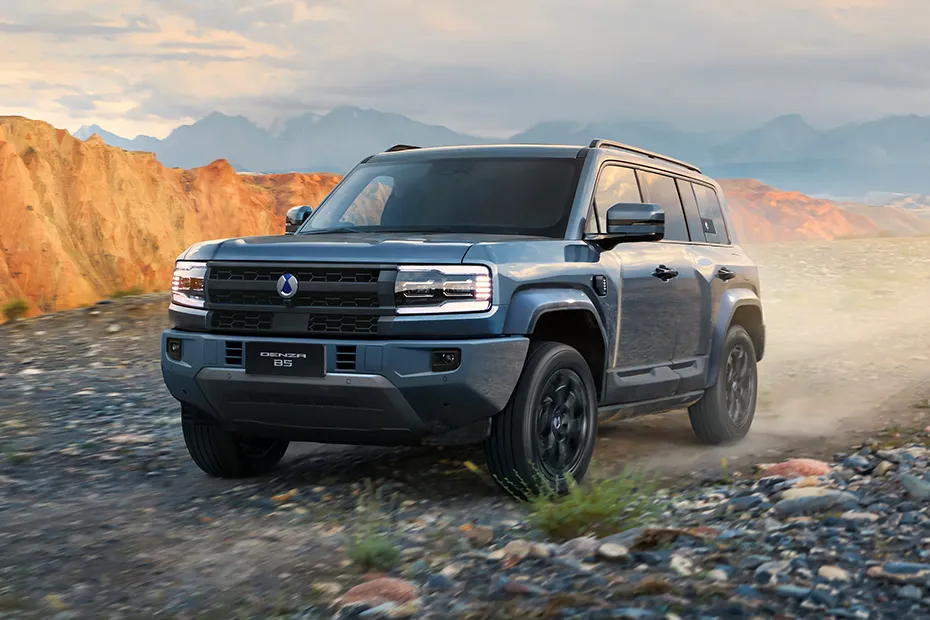
DENZA brings hybrid off-road SUVs into PH market with B5 and B8 launch

DENZA Philippines has expanded its local lineup with the launch of the B5 and B8 electrified SUVs, following the brand’s appearance at the 2026 Manila International Auto Show.
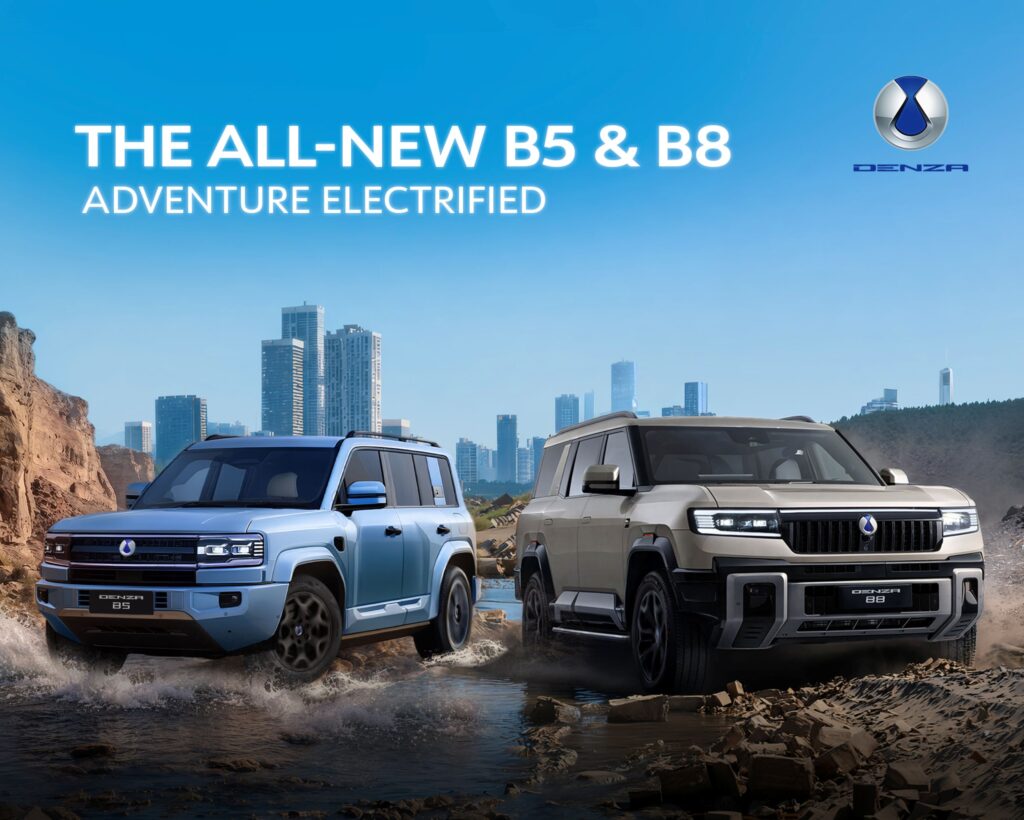
Introduced under the “Adventure Electrified” campaign, the two sport utility vehicles target buyers looking for electrified powertrains combined with off-road capability and premium cabin features.

According to Adam Hu, the launch allows the brand to reach more SUV buyers in the Philippines, particularly those looking for new energy vehicles with both utility and lifestyle appeal.

The DENZA B5 enters the market as a midsize plug-in hybrid SUV that uses the brand’s DMO Super Hybrid system. It combines a 1.5-liter turbocharged engine with a dual-motor setup that produces 425 kW and 760 Nm of torque.

The vehicle carries a 31.8-kWh BYD Blade battery and an 83-liter fuel tank, allowing a claimed combined NEDC driving range of up to 975 kilometers. DENZA said the B5 also comes with four-wheel drive and electronically controlled front and rear locking differentials for changing road and terrain conditions.

The B5 includes a large infotainment display, digital instrument cluster, head-up display, panoramic sunroof, ambient lighting, and a 360-degree camera system. The SUV also gets massage and ventilated seats along with driver assistance systems.

The larger B8 arrives as a full-size SUV offered in Dynamic and Premium variants. It combines a 2.0-liter engine with a dual-motor setup that delivers 450 kW and 760 Nm of torque. DENZA said the SUV can accelerate from zero to 100 kph in 4.8 seconds.

The B8 uses a 36.9-kWh battery and a 91.5-liter fuel tank, giving it a claimed combined range of up to 1,040 kilometers under NEDC standards.

DENZA equipped the B8 with its DiSus-P Intelligent Damping Suspension system and electronically controlled locking differentials. The setup adjusts suspension damping based on road conditions and wheel movement to improve ride stability and traction on uneven surfaces.

Both SUVs include terrain response modes for mud, sand, rock, and water wading conditions. They also feature Leopard Turn technology designed to improve maneuverability in tight spaces and off-road trails.

The vehicles connect to the DENZA mobile app, which allows owners to monitor vehicle status, charging levels, fuel levels, and location remotely.

DENZA Philippines will hold the DENZA Arena customer test drive event from April 24 to 26, where potential buyers can test the vehicles on steep inclines, water wading sections, side slopes, and uneven terrain.

The B5 carries a launch price of P3.498 million, while the B8 is priced at P4.698 million for the Dynamic variant and P5.098 million for the Premium variant.


Continue Reading
Click to comment

Leave a Reply

Your email address will not be published. Required fields are marked *

EV

First move

Published

on

VinFast VF 5 gives first-time buyers a car that can also earn

For many Filipinos, buying a first car is no longer only about reaching a personal milestone. It can also become the starting point for a small transport business or an additional source of income.

The VinFast VF 5 makes a case for both roles by combining compact dimensions, an electric powertrain and enough space for everyday family use. Its size helps drivers navigate crowded streets and tight parking areas, while the raised SUV seating position provides a clearer view of surrounding traffic.

The cabin accommodates five passengers and can handle regular commutes, grocery trips and weekend drives. A digital cockpit and practical convenience features also give first-time owners the equipment expected from a modern vehicle.

Those same qualities allow the VF 5 to serve beyond personal transportation. Owners may use it for ride-hailing, shuttle services, tourism transport or other mobility-based work as more Filipinos turn to flexible income opportunities.

Around 9.9 million Filipinos participate in some form of gig work, according to data cited in the 2025 Ipsos “Gig Life PH” study. About 61 percent do it part-time to supplement earnings from a regular job or an existing business.

The VF 5’s electric powertrain can help operators reduce spending on fuel and routine maintenance compared with a conventional gasoline vehicle. It offers a driving range of up to 326 kilometers under the NEDC standard, while DC fast charging can bring the battery from 10 to 70 percent in about 33 minutes.

Its ability to handle commercial use is already being tested at scale in Vietnam, where the model serves as the primary vehicle of Green GSM, an all-electric ride-hailing service.

Electric vehicle adoption is also gaining ground in the Philippines. EV registrations reached 29,715 units during the first seven months of 2025, exceeding the 24,000 units recorded for the whole of 2024, based on Land Transportation Office figures cited by VinFast.

The Electric Vehicle Industry Development Act has helped support that growth. Zero-tariff rates on EVs and their components have been extended through 2028, giving individual buyers and fleet operators another reason to consider switching to electric mobility.

VinFast is also supporting VF 5 ownership through battery subscription options, a resale value guarantee and free charging on the V-Green network until March 31, 2029. Its local EV ecosystem includes vehicles, charging stations, dealerships and aftersales services.

For a first-time buyer, the decision often comes down to choosing between a vehicle for personal needs and one that can support future income. The VF 5 offers a way to cover both, serving as a daily car when needed and a working asset when an opportunity comes along.

Continue Reading

EV

Route Recharge

Published

on

ACMobility and Shell Pilipinas Corp. have activated eight electric vehicle charging hubs at selected Shell Mobility stations, giving EV drivers more charging options along key routes outside Metro Manila.

The rollout follows a partnership signed in September 2025 to install DC fast chargers at Shell stations located along major highways and other strategic areas. The network is designed to support longer electric vehicle trips across Luzon, Visayas and Mindanao.

The newest hubs are located at the northbound and southbound Shell Mobility stations along the North Luzon Expressway in Mexico, Pampanga. The sites can serve motorists heading to northern destinations such as Baguio City and La Union, as well as travelers returning to Metro Manila.

Other operational charging hubs are located at Shell North Expressway Dau in Pampanga, Shell Subic in Zambales, Shell Mangaldan and Shell Tanaytay Alaminos in Pangasinan, and Shell Bago Aplaya Talomo and Shell Matina Enclaves in Davao City.

Carla Buencamino, ACMobility head of mobility infrastructure, said the partnership helps advance the Philippine EV Spine by placing charging facilities along major roads that connect destinations across the country.

Shell Mobility non-fuel retail and e-mobility manager Jolo Valdez said the project combines Shell’s network of strategically located stations with ACMobility’s experience in developing charging infrastructure.

ACMobility and Shell plan to establish charging hubs at 50 Shell locations, with more than 100 charge points expected nationwide. Additional facilities in Pampanga, Cavite and Camarines Sur are set to open soon, while sites in Batangas, Bataan and Cebu are scheduled for construction.

The charging hubs are connected to the Evro mobile application, which allows drivers to check charger availability in real time, plan charging sessions and pay through GCash or credit card.

ACMobility had more than 200 charging locations across the Philippines as of July 2026, with additional charge points being activated each month.

The expanded network gives EV owners more flexibility when traveling beyond urban routes, where reliable charging access remains an important part of planning longer journeys.

Continue Reading

Cars

DOUBLE DUTY

Published

on

Toyota Motor Philippines has started retail sales of the ninth-generation Hilux, introducing a redesigned diesel lineup alongside the nameplate’s first battery-electric 4×4 variant.

The all-new pickup adopts Toyota’s “Cyber Sumo” design, combining the Hilux’s familiar muscular proportions with sharper details. C-shaped LED headlamps frame a wider honeycomb grille, while the rear receives updated lighting and a deck-side step for easier access to the cargo bed.

Each grade carries its own styling. The Conquest gets a rugged front bumper aimed at buyers who use their pickups for outdoor trips and overlanding, while the Hilux BEV uses an enclosed grille to improve aerodynamics and distinguish it from the diesel models.

All internal combustion engine variants retain Toyota’s 2.8-liter 1GD-FTV turbo-diesel engine. It produces 204 PS, with torque rated at 420 Nm for manual versions and up to 500 Nm for automatic models.

Toyota continues to use independent double wishbones at the front and a rigid rear axle with leaf springs. Higher variants gain ventilated disc brakes on all four wheels, while the entry-level versions pair front discs with rear drums.

The V and Conquest grades now use electric power steering to reduce effort during parking and other low-speed maneuvers. The G and E variants retain hydraulic steering, which suits their more work-focused character.

At the top of the diesel range, the Conquest adds Multi-Terrain Select with settings for Dirt, Rock, Sand, Mogul and Mud. It also comes with an electronic parking brake, Auto Hold, a Panoramic View Monitor, seven airbags and Toyota Safety Sense 3.0.

The cabin receives a more modern dashboard and updated technology. Conquest and V models feature a 12.3-inch infotainment display with wireless Apple CarPlay and Android Auto, while G and E variants use an 8-inch unit with wired smartphone connectivity.

Synthetic leather upholstery and an eight-way power-adjustable driver’s seat give the Conquest a more SUV-like cabin. Similar equipment appears in the BEV, which also gets wireless charging and a Panoramic View Monitor.

The electric Hilux uses a dedicated ladder-frame chassis with added protection for its high-voltage battery and electric axle. A dual-motor system delivers a combined 196 PS, with 200 Nm from the front motor and 269 Nm from the rear.

Permanent electric all-wheel drive distributes power between the axles, while a 59.2-kWh lithium-ion battery provides up to 315 kilometers of range under the NEDC standard.

Owners receive a complimentary wall charger with home installation. The pickup supports AC Type 2 and DC CCS2 charging and can also use Toyota dealerships equipped with EV charging facilities in Metro Manila, Pampanga, Laguna, La Union, Batangas and Cebu.

Ground clearance reaches as much as 312 mm for the diesel variants and 287 mm for the BEV. Both powertrain choices are designed to preserve the Hilux’s ability to handle work, recreational driving and rough terrain.

Prices start at ₱1.772 million for the Hilux 2.8 4×2 E automatic and rise to ₱2.631 million for the 4×4 Conquest automatic with premium color. The sole Hilux BEV variant costs ₱2.990 million.

The expanded range gives buyers a choice between the long-distance flexibility and towing capability of diesel power and the quieter operation and immediate response of a fully electric drivetrain.

Continue Reading

Trending