Motorcycles
Daquigan Double
Honda Philippines’ 16-year-old talent Alfonsi Daquigan swept Round 5 of the Idemitsu Asia Talent Cup at Mandalika, taking Race 1 and Race 2 to become the first Filipino rider to win an ATC race and then back it up on the same weekend. The October 4 to 5 event at Indonesia’s Pertamina Mandalika International Circuit capped a statement performance from the young Filipino.
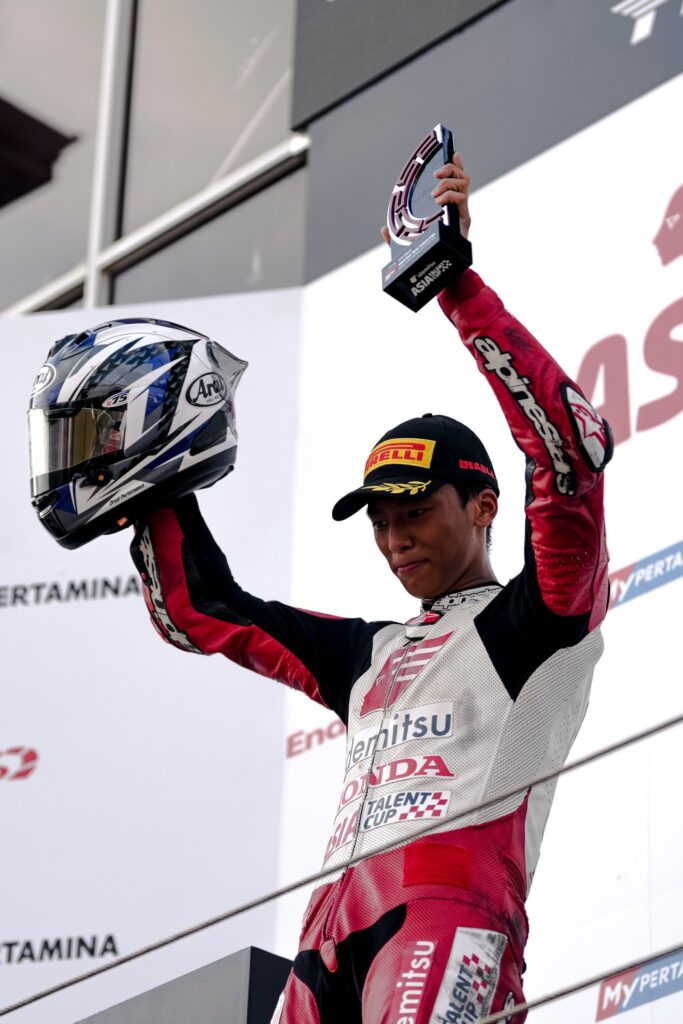
Daquigan overcame a double long-lap penalty in Race 1 and still crossed the line first. The Sunday rematch was cleaner and just as decisive as he sealed the double, moving up to third in the overall standings after Round 5.
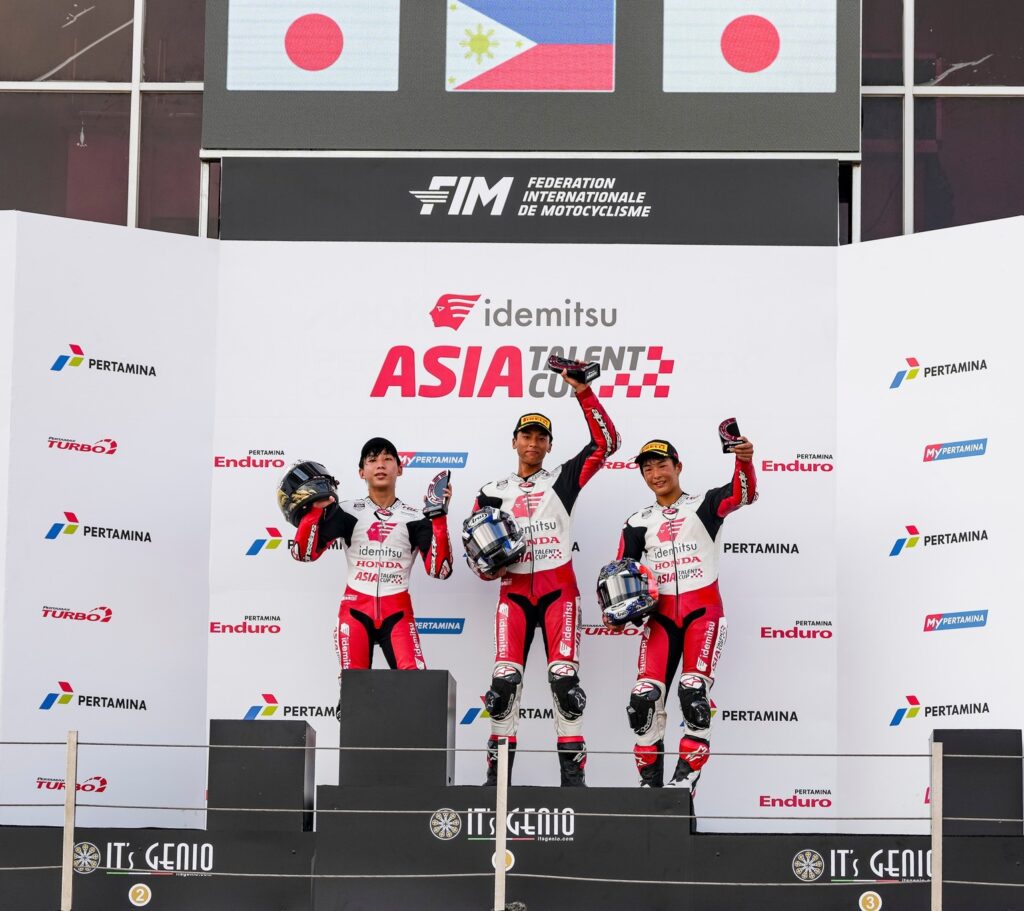
Honda Philippines said the result reflected Daquigan’s discipline, consistency, and drive as he battled the best youth riders across Asia while carrying the flag on the international stage.

Motorcycles
China’s new superbike challenger
Chongqing, China | A breakthrough victory in international racing has placed Chinese motorcycle manufacturer ZXMoto on a fast road toward global expansion.
Founder Zhang Xue watched the company’s superbike finish four seconds ahead of its rivals at the Supersport World Championship in March. It was only ZXMoto’s third race in the series, but the result immediately lifted demand for its motorcycles.

ZXMoto has since doubled its workforce, while its factory in Chongqing operates around the clock. Production has yet to catch up, with customers still waiting several months for their orders.
“You have this dream you’ve been thinking about for many years, and when it finally comes true, I was so happy,” Zhang said.
The former motorcycle mechanic established ZXMoto two years ago and now wants the company to challenge established European and Japanese manufacturers.

Its flagship 820RR produces 133 horsepower and can accelerate from zero to 100 kilometers per hour in 2.8 seconds. It retails for around 43,000 yuan, or about $6,370, in China, which makes it at least 30 percent cheaper than comparable foreign motorcycles.
The combination of performance and price has attracted local riders who previously looked to brands such as Kawasaki, Yamaha, Honda and Ducati.

ZXMoto sold 25,000 motorcycles in 2025 and expects that figure to reach 100,000 units this year. The company plans to double annual sales by 2027, which would place its volume near BMW Motorrad’s present scale.
However, the company’s growth comes as China’s domestic motorcycle industry faces lower demand and tighter profit margins.
Motorcycle sales in China fell 3.4 percent in 2025 and continued to decline this year. More buyers are choosing cars or electric two-wheelers, while intense competition has forced manufacturers to reduce prices.
“Twenty years ago, as long as you produced a motorcycle, even if it didn’t start, people would line up to give you money,” Zhang said. “Now, if you don’t get serious, you will be eliminated by the market.”

ZXMoto enjoys a loyal following in China, where Zhang’s rise from mechanic to motorcycle manufacturer has made him a symbol of the country’s industrial progress. That domestic support may not be enough as local demand weakens, which has made overseas sales increasingly important.
China produced 22 million motorcycles last year, and half were exported. Manufacturers are now seeking markets with stronger purchasing power and better margins.
ZXMoto aims to export 40,000 motorcycles to Europe in 2027. Another Chongqing manufacturer, Shineray, already sells 90 percent of its entry-level models in South America, Southeast Asia and Africa.
Chongqing gives these companies access to more than 50 motorcycle manufacturers and hundreds of component suppliers. The city’s large industrial base helps brands develop products quickly and control production costs.
Bill Russo, an expert on China’s automotive industry, said companies such as ZXMoto are coming from one of the world’s most competitive manufacturing environments. Integrated supply chains and rapid product development have helped them improve at a pace similar to Chinese carmakers.
Russo compared today’s Chinese motorcycle industry with the country’s passenger-car sector about a decade ago. Companies such as BYD and Geely eventually became serious competitors to long-established foreign manufacturers through competitive pricing and improving technology.
Motorcycles may prove more difficult because buyers often place greater value on racing history, heritage and brand prestige. Those qualities give Japanese and European companies a stronger position than many foreign carmakers once had in China.
“The gap is closing, but it won’t close overnight,” Russo said.
ZXMoto nevertheless expects overseas customers to account for most of its sales within five years. The company is also preparing an 800-million-yuan factory scheduled to open in late 2027.
Its long-term target is to rank among the world’s 10 largest motorcycle brands by 2034.
“When Japanese products first entered Europe, there was the same reaction. There were many questions,” Zhang said. “But as long as the products are good, one day people will accept and enjoy them.”
Motorcycles
VinFast opens nationwide e-motorcycle test rides
VinFast is giving Filipino riders a chance to try its first electric motorcycle lineup as public test rides begin at dealerships nationwide on 31 July.
The activity covers the VinFast Evo, Feliz II and Viper. Riders can compare the three models, ask about pricing and ownership options, and see how battery swapping works at select locations.

Test ride activities will continue through August at dealerships in Metro Manila, Metro Cebu and Metro Davao. More locations in Cavite, Laguna, Batangas, Rizal and Bulacan are also expected to join as VinFast expands its Philippine dealer network.
The program allows riders accustomed to gasoline-powered motorcycles to experience how an electric model performs on the road. It also gives them a closer look at charging, battery access and the different ways they can own or use the batteries.

Leading the lineup is the Evo, which offers a claimed range of up to 150 kilometers with two fully charged batteries. It can reach a top speed of 80 kilometers per hour and combines clean styling with performance suited to daily travel.
The Feliz II takes a more practical approach and has a top speed of 90 kilometers per hour. Meanwhile, the sportier Viper produces a maximum output of 5,200 watts and can also reach 90 kilometers per hour.
All three models have two battery compartments beneath the seat and support battery swapping. Buyers may purchase the motorcycle with batteries or subscribe to a battery plan. Home charging is another option for riders who prefer to recharge overnight.
Battery-swapping stations are already operating at selected VinFast e-motorcycle dealerships. The system allows a rider to exchange depleted batteries for charged units instead of waiting for them to recharge.

VinFast plans to work with partners to deploy around 30,000 battery-swapping cabinets across the Philippines. If completed, the network would make battery access easier for riders who travel regularly or do not have a convenient home-charging setup.

Dealership representatives will be available during the test ride activities to explain the motorcycles’ features, available colors and ownership arrangements.
Interested riders may check the VinFast Philippines website for the nearest dealership and available test ride schedules.
Motorcycles
Swap and Go
VinFast Feliz II cuts charging stops to about a minute
VinFast E-Motorcycle Philippines is preparing to launch the Feliz II with a battery-swapping system designed to get riders moving again in about one minute.
The One-Minute Swap allows a rider to remove a depleted battery and replace it with a fully charged unit at a V-Green station. The system will also support the VinFast Evo and Viper electric motorcycles.
VinFast and V-Green plan to establish around 30,000 battery-swap stations nationwide. Proposed locations include VinFast dealerships, partner motorcycle shops, malls and fuel stations, giving riders more places to replace batteries during daily trips or work shifts.
The service gives owners another option aside from home charging. A single battery takes about three to four hours to charge, while two batteries require around six to eight hours. Riders who need additional range during the day can instead visit a swap station and continue their trip without waiting through a full charging cycle.
VinFast will offer access to the network through a battery subscription starting at P439 per month. The first 12 months will be free, covering up to 20 swaps each month. The company said choosing the subscription setup could also lower the motorcycle’s initial cost by around 20 percent compared with buying the unit with batteries included.
VinFast estimates that total ownership costs could be at least 25 percent lower than those of a comparable gasoline motorcycle over five years. Riders who cover long distances and refuel frequently, including ride-hailing drivers, could see the largest savings.
The subscription also places battery maintenance under VinFast. A battery will be replaced without charge once its health falls below the company’s specified performance threshold, reducing concerns over long-term battery degradation.
The Feliz II can travel up to 145 kilometers using two batteries and has a top speed of 90 kilometers per hour. VinFast also describes the scooter as spacious enough to accommodate a family of three. Its IP67 waterproof rating provides added protection during sudden rain and travel through wet conditions.
The Feliz II will officially arrive in the Philippines on July 31 alongside the Evo and Viper, introducing VinFast’s battery-swapping approach to the local electric motorcycle market.