Cars
HYUNDAI KONA’s Comeback Packs a Green Punch

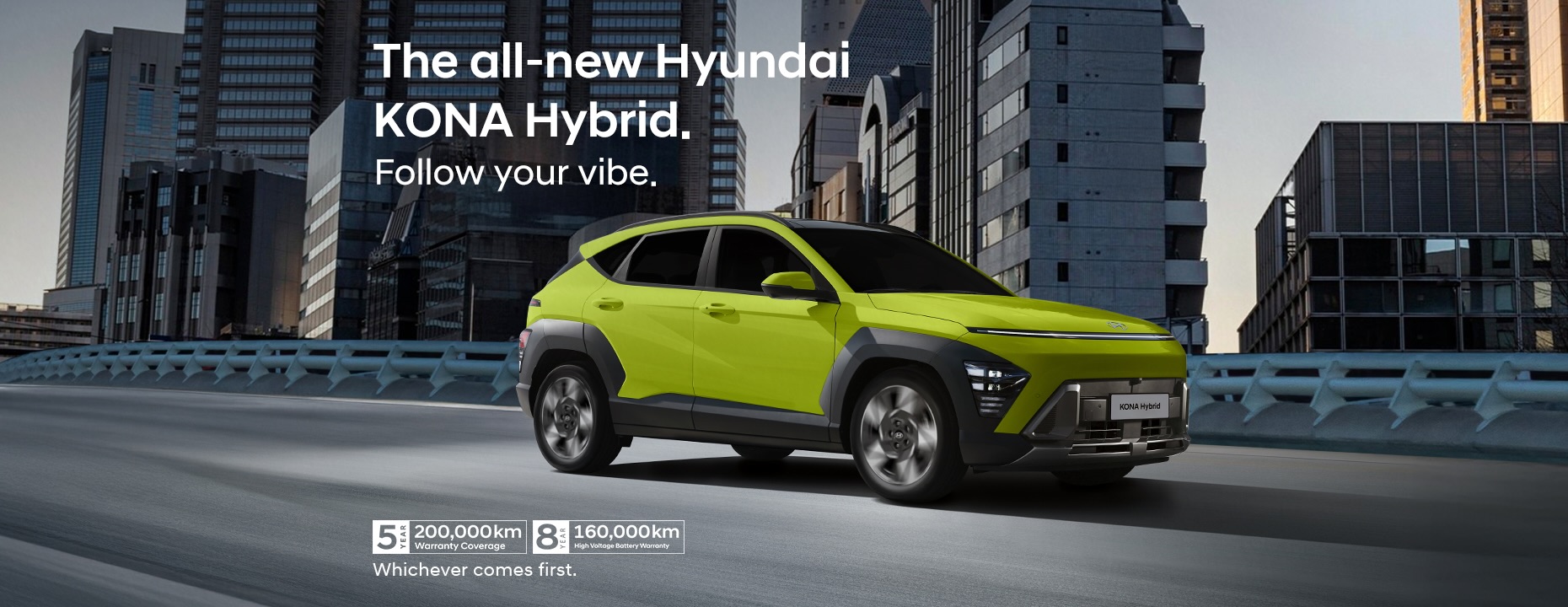
Hyundai Motor Philippines Inc. (HMPH) has officially brought back the KONA to the local market—this time as a hybrid. The launch of the all-new KONA Hybrid took place at Bonifacio High Street Amphitheater in BGC, marking Hyundai’s third year in the country under its new local distributor.
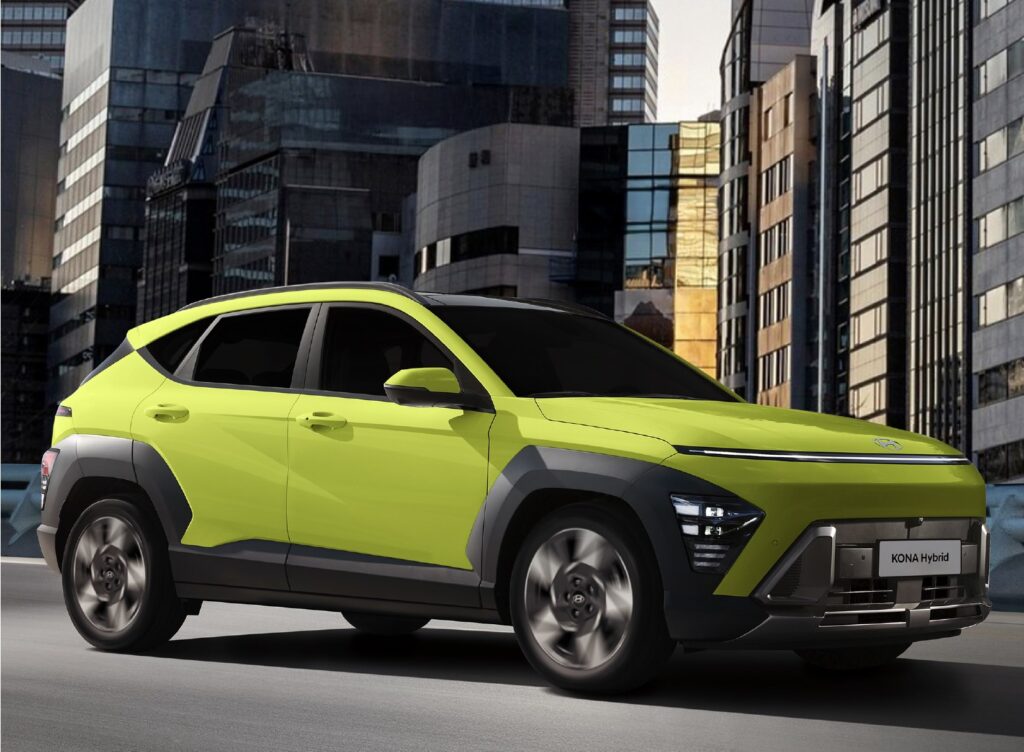
Originally introduced globally in 2017 and to the Philippine market in 2018, the KONA has collected accolades for its design and performance. Now, it returns as a more futuristic, electrified version aimed at modern Filipino drivers looking for a tech-forward, fuel-efficient crossover.
The new KONA Hybrid adopts a sharper and more aerodynamic look. A full-width LED horizon lamp, 3D bumper accents, and sleeker body lines define the new aesthetic. The Premium trim features 18-inch two-tone alloy wheels, roof rails, and a sunroof, enhancing both its practicality and presence on the road.
Under the hood is a 1.6-liter hybrid engine mated to a 6-speed dual-clutch transmission. It delivers 141 PS and 144 Nm of torque and includes Smart Regenerative Braking and e-Motion Drive technology for improved efficiency and ride comfort in both city and highway settings.
The interior showcases a modern design highlighted by a panoramic display setup featuring two 12.3-inch screens—one for the instrument cluster and another for infotainment. Also included are an electronic gear selector, an 8-way power-adjustable driver’s seat, wireless phone charging with cooling, USB-C ports, and foldable cup holders. The second-row seats fold flat, expanding cargo space to 1,241 liters. A Smart Power Tailgate allows height customization for low-clearance garages.
Safety is a key highlight, with Hyundai’s SmartSense driver-assistance suite. Features include Forward Collision Avoidance, Lane Keeping Assist, Smart Cruise Control with Stop & Go, Blind Spot View Monitor, and a 360-degree Surround View Monitor.
The KONA Hybrid comes in two variants: the GLS priced at Php 1,528,000 and the Premium at Php 1,688,000. Available colors include Neoteric Yellow, Atlas White, Abyss Black Pearl, Cyber Gray, and Meta Blue Pearl.
With this release, Hyundai adds another nameplate to its growing list of electrified options in the country, joining the SANTA FE, TUCSON, and ELANTRA hybrids—positioning the KONA as a key option for Pinoys exploring greener mobility.


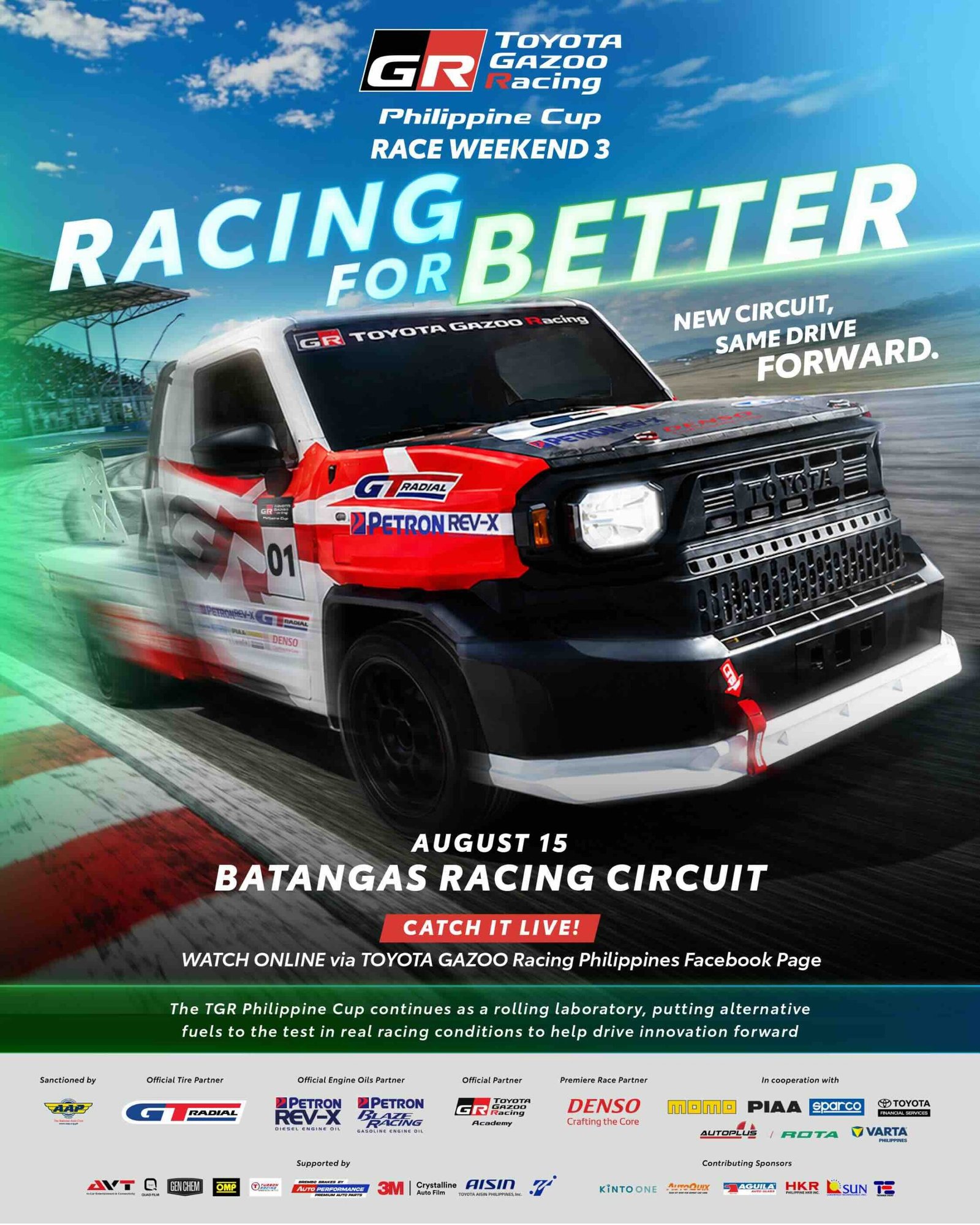
Toyota Motor Philippines will hold Race Weekend 3 of the 2026 Toyota Gazoo Racing Philippine Cup at Batangas Racing Circuit in Rosario, Batangas, on August 15.
The event will be the championship’s first visit to the country’s oldest permanent car racetrack. Admission is free, while the races will also be shown live on the Toyota Gazoo Racing Philippines Facebook page.
Drivers will compete across the Super Sporting, Sporting and Legacy classes using Vios one-make race cars. The Tamaraw class will return with the Tamaraw one-make race car introduced this season.
Batangas Racing Circuit’s technical layout will give competitors a different challenge as they adjust to a new venue.
TMP Senior Vice President for Marketing Sherwin Chua-Lim said the circuit will test the drivers while introducing the racing series to more car enthusiasts.
“Our aim at Toyota Gazoo Racing has always been to provide opportunities for racers to test their limits for better and to bring racing closer to different car communities,” Chua-Lim said.
The race cars will continue using low-carbon fuel blends introduced during the previous round. The Vios race cars will run on E20, which contains 20 percent bioethanol, while the Tamaraw entries will use B5 fuel with a five percent coco-biodiesel blend.
TMP said the program supports the study of lower-carbon fuels and their possible wider use. It also seeks to contribute to energy security and the development of local biofuel supply chains.
TMP First Vice President for Corporate Affairs Josephine Villanueva said racers gave positive feedback on the performance of the blended fuels under demanding track conditions. Toyota will continue studying their feasibility for future motorsports events.
The race weekend is supported by partners including GT Radial, Petron, Denso and the Toyota Gazoo Racing Academy.
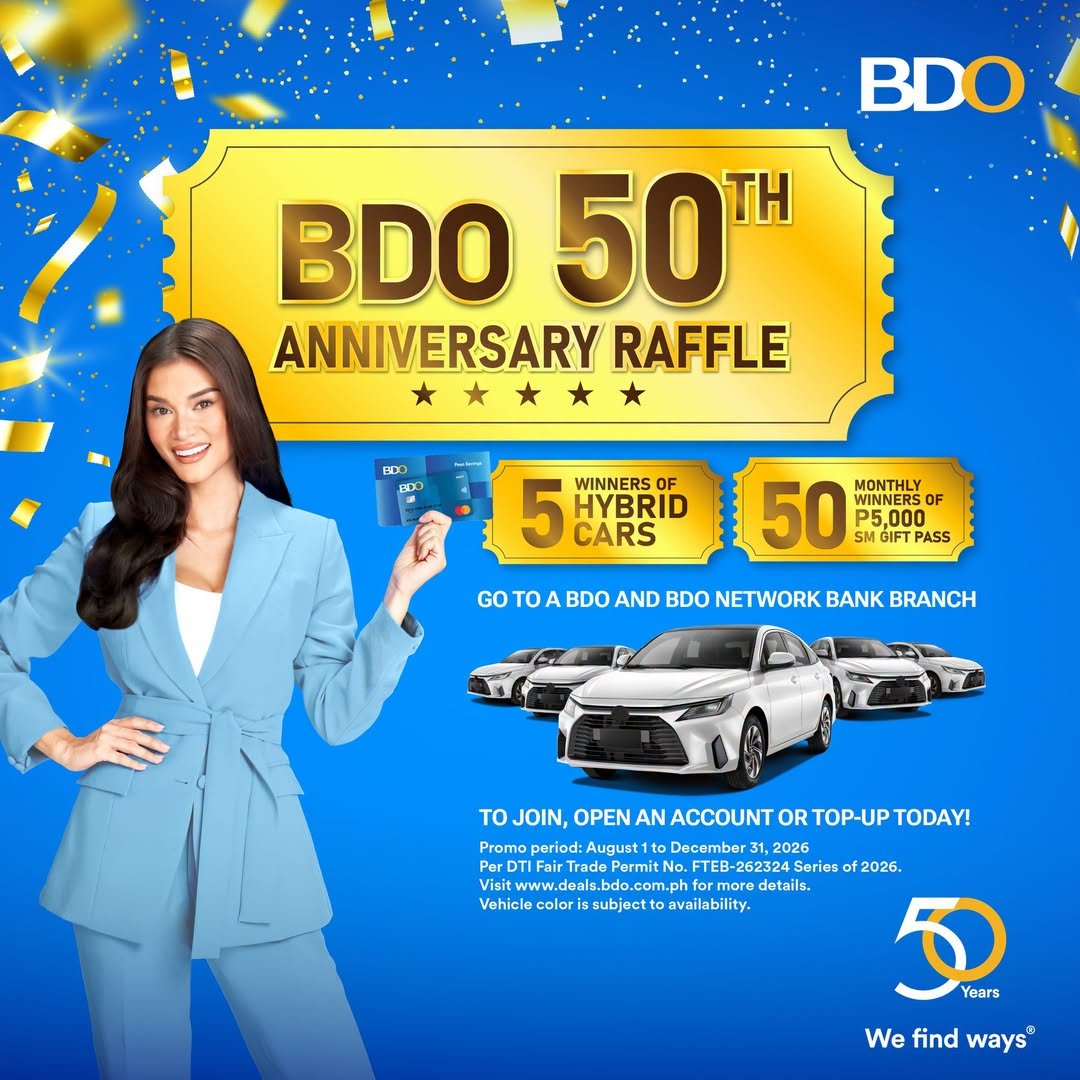
BDO Unibank is celebrating its 50th anniversary with a nationwide raffle that gives customers a chance to win five Toyota Ativ Hybrid cars and 250 SM Gift Passes.
The BDO 50th Anniversary Raffle runs from August to December 2026 and is open to eligible clients of BDO Unibank and BDO Network Bank.

New customers may join by opening a qualified deposit account, completing a one-time online registration and maintaining the required balance. Existing clients can earn entries by adding to their deposits and registering online.
The raffle has five draws. Customers who qualify in August can win one of 50 SM Gift Passes worth P5,000 each during the first draw on 14 September.
Another 50 gift passes will be awarded on 14 October to customers who qualify in September.
The next two draws will add hybrid cars to the prizes. Customers who qualify in October can win one Toyota Ativ Hybrid and one of 50 gift passes on 14 November. The same set of prizes will be awarded to November qualifiers during the 14 December draw.

All eligible entries earned from August to December will be included in the grand draw on 14 January 2027. Three Toyota Ativ Hybrid cars and another 50 SM Gift Passes will be given away during the final draw.
BDO introduced the raffle as a thanksgiving program for clients who have supported the bank during its first five decades.
The bank has served Filipinos through different stages of their financial lives, from opening an account for a first salary to saving for a home, education, business or retirement.

Financial habits have changed considerably during that period as mobile apps and online services made many banking transactions available without a branch visit. Customers have also started saving for a wider range of goals, including emergency funds, travel, investments and small businesses.
BDO said it will continue adapting its services as customer needs and banking habits change.
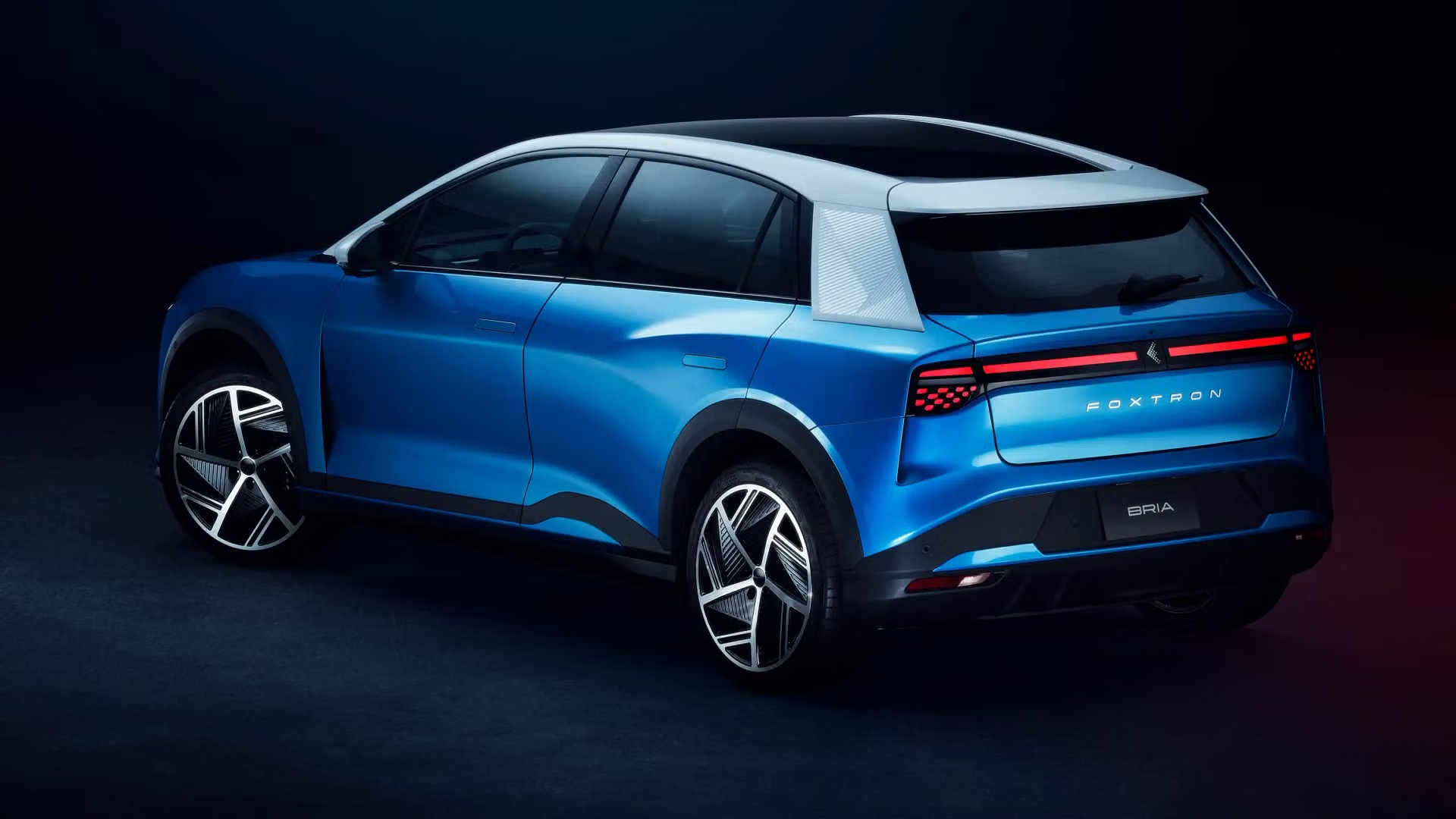
Mitsubishi is bringing back the ASX name for a new battery-electric model in Australia, where the 2027 ASX VR-e is scheduled to arrive in showrooms in the fourth quarter of 2026.
The new EV is not related to the gasoline-powered ASX currently sold in Australia. Instead, it is based on the Foxtron Bria, an electric vehicle developed in Taiwan by Foxtron, the automotive arm of electronics manufacturer Foxconn.
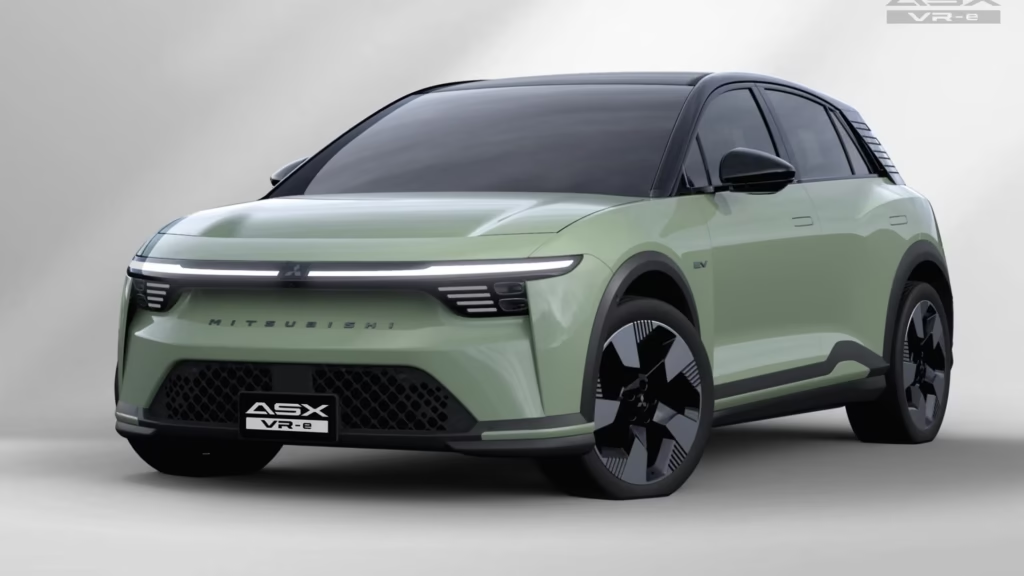
Mitsubishi has carried out local testing and development for Australia and New Zealand, while also giving the vehicle its own exterior and interior details.
The ASX VR-e name combines two familiar Mitsubishi badges. ASX stands for Active Sports Crossover, while VR-e takes inspiration from the VR-4 designation previously used on performance models such as the Galant VR-4.
Four variants are planned for Australia, namely LS, Aspire, Exceed and GSR.
Mitsubishi has so far released only limited technical information for the ASX VR-e, but the Foxtron Bria on which it is based is offered with rear-wheel-drive and all-wheel-drive configurations.
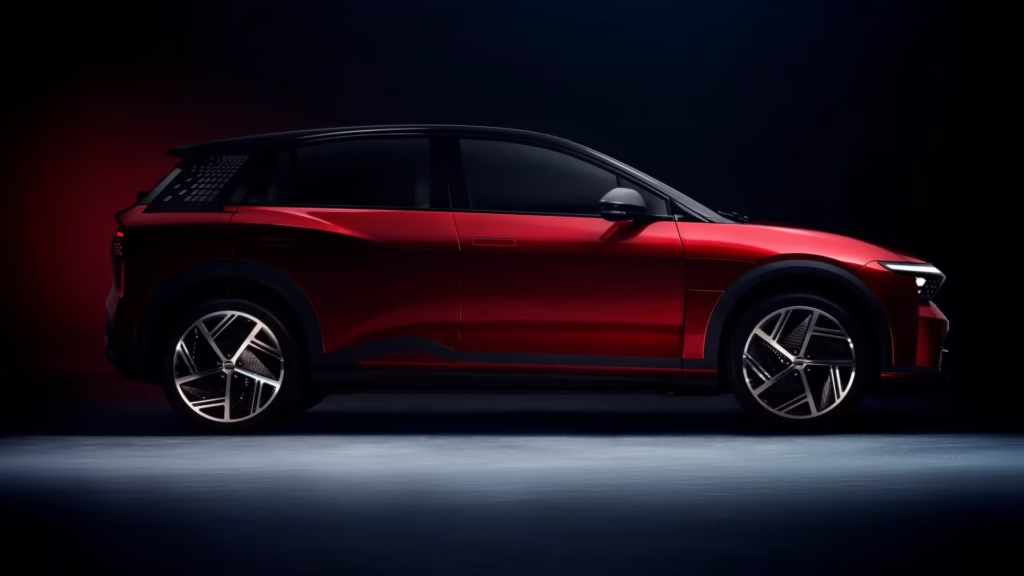
The rear-wheel-drive version uses a single electric motor producing 171 kW, or about 229 hp, and can accelerate from zero to 100 km/h in 6.8 seconds. The dual-motor all-wheel-drive version develops 298 kW, or about 400 hp, and cuts the sprint to 3.9 seconds.
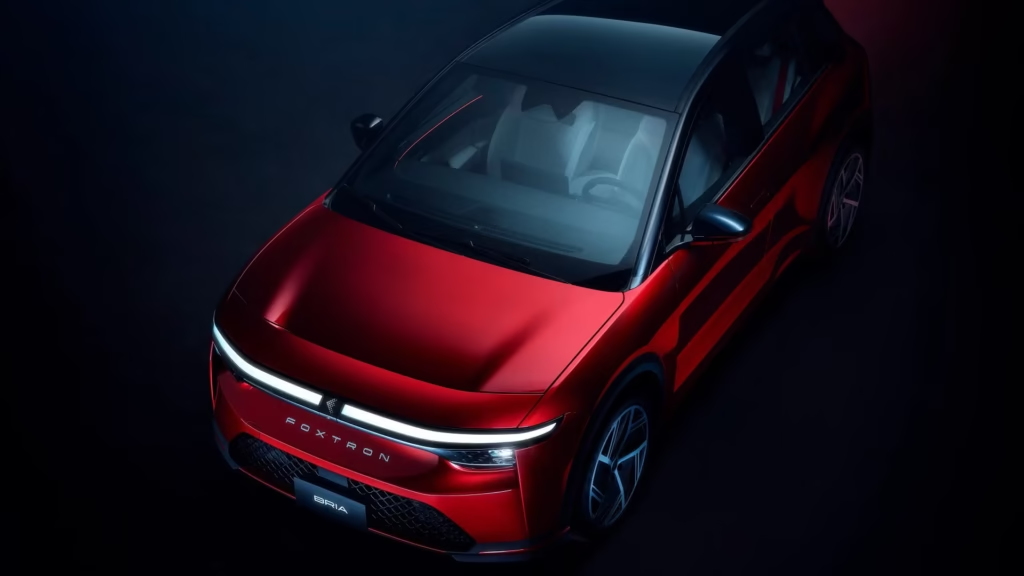
Both versions use a 57.5-kWh lithium iron phosphate battery. The Bria is rated at up to 516 km of range under the NEDC test cycle for the rear-wheel-drive model, while the all-wheel-drive version is rated at 466 km.
Estimated WLTP figures are lower at around 430 km and 400 km, respectively. DC fast charging is rated at up to 134 kW, with a 10 to 80 percent charge said to take about 30 minutes.
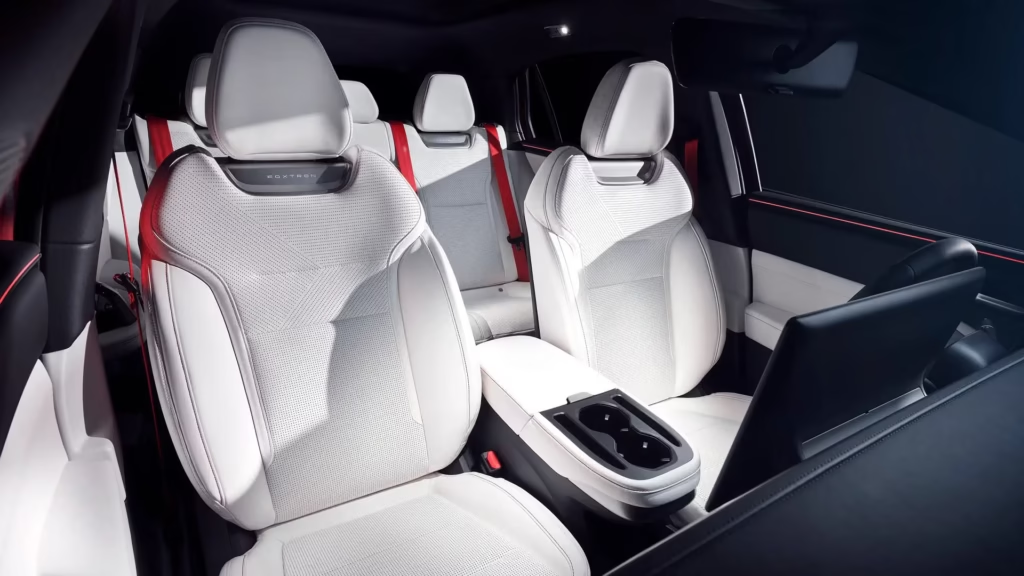
The ASX VR-e measures 4,315 mm long, 1,885 mm wide and 1,535 mm tall, with a 2,800-mm wheelbase. Its dimensions place it in the small crossover and hatchback class.
Changes from the Foxtron version include Mitsubishi badging, revised daytime running lights, different alloy wheels and interior trim. The vehicle also uses an S-duct through the front fascia and active grille shutters to help reduce aerodynamic drag.
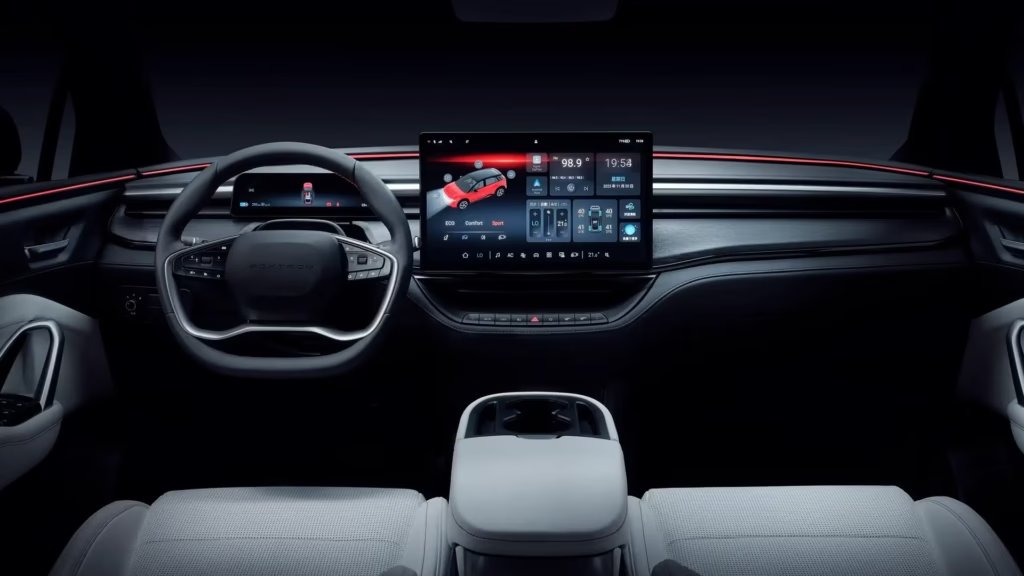
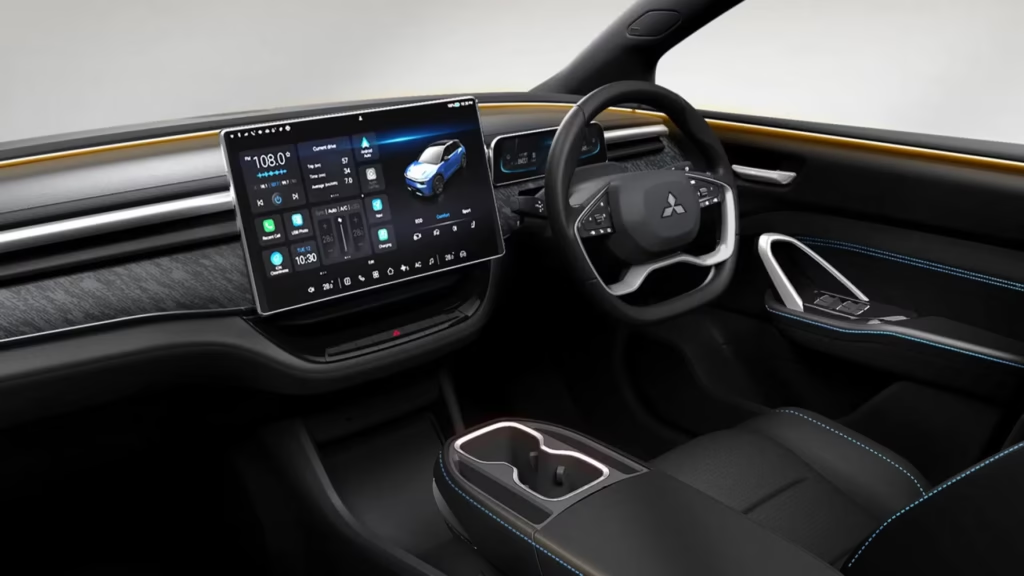
Expected equipment includes a 15.6-inch infotainment display, 9.2-inch digital instrument panel, power-adjustable front seats, a 360-degree camera, glass roof and ambient lighting.
Mitsubishi Motors Australia CEO Shunichi Kihara described the ASX VR-e as the brand’s first battery-electric vehicle in Australia since the i-MiEV and part of Mitsubishi’s wider electrification plans under its Momentum 2030 strategy.
Pricing and final Australian specifications will be announced closer to its launch later this year.