Connect with us

EV

M Goes Electric

Published

on

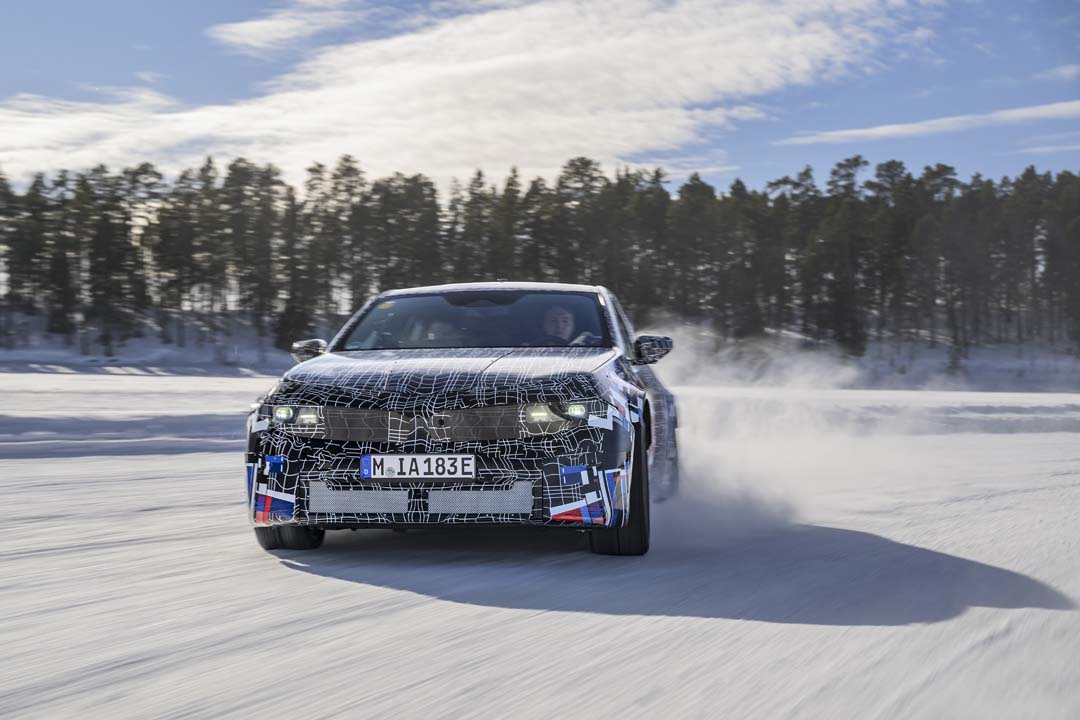
BMW is preparing to take its performance division into a fully electric future, with the first all-electric BMW M models set to arrive from 2027. The brand says these vehicles will carry the same high-performance character that defined BMW M on racetracks and public roads for decades, now powered entirely by electricity.

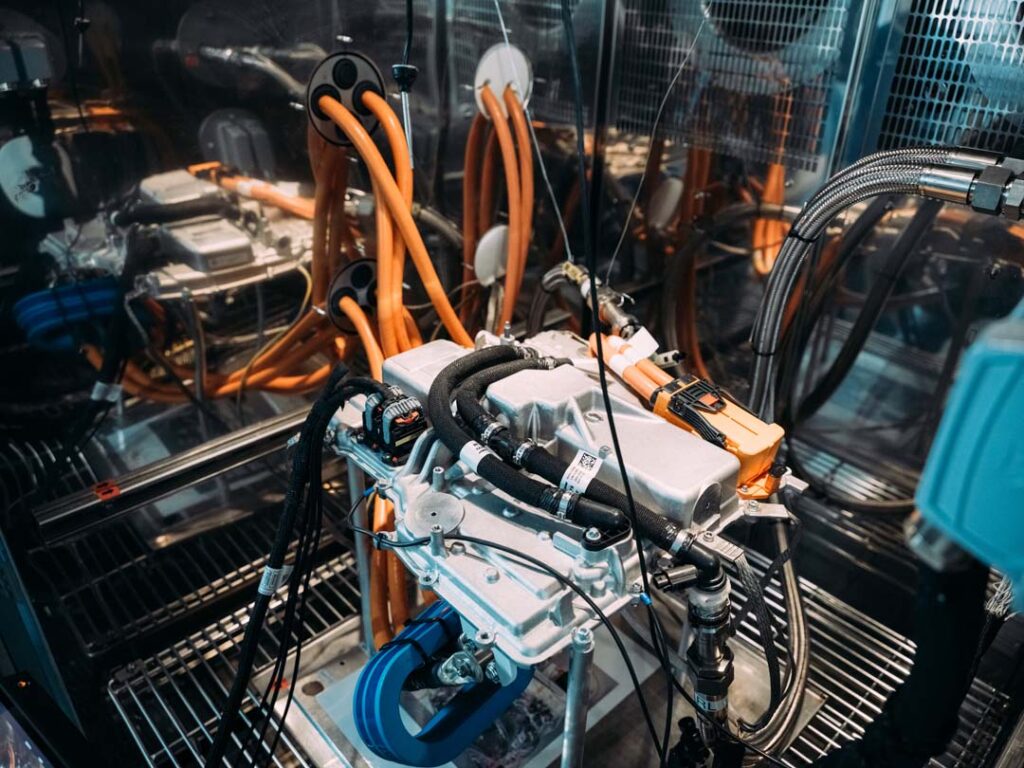
The upcoming models are built on BMW’s Neue Klasse platform and use a newly developed electric system called BMW M eDrive. Unlike current setups, each wheel is powered by its own electric motor. This four-motor layout allows precise control of power delivery at every corner, improving traction, stability, and response during both daily driving and track use.

At the center of this system is BMW M Dynamic Performance Control, managed by a high-speed computing unit known internally as the “Heart of Joy.” The system processes driving data in real time and adjusts torque distribution instantly. BMW says this allows the electric M cars to behave like rear-wheel-drive models when needed, while still benefiting from all-wheel-drive capability for grip and efficiency. The front axle can even be fully decoupled during steady highway driving to improve range.

Power comes from a newly developed high-voltage battery with more than 100 kWh of usable energy. The battery is designed specifically for high-performance use and supports 800-volt charging technology for faster charging times. BMW also highlights improved energy recuperation, which allows the system to recover more power during braking without compromising performance.

The battery housing plays a structural role in the vehicle, connecting the front and rear axles. This design increases overall stiffness and contributes to sharper handling. Cooling systems and electronic controls have also been upgraded to handle sustained high loads during aggressive driving.
BMW M is also introducing new lightweight materials in these electric models. For the first time, natural fiber components will be used in place of some carbon fiber parts. The company says these materials offer similar strength while reducing carbon emissions during production.

BMW M managing director Franciscus van Meel said the shift to electric power allows the brand to push performance further while staying true to its racing roots. The company positions these upcoming models as everyday cars that can still deliver serious track capability.


Continue Reading
Click to comment

Leave a Reply

Your email address will not be published. Required fields are marked *

Deals

Five hybrid cars await BDO raffle winners

Published

on

BDO Unibank is celebrating its 50th anniversary with a nationwide raffle that gives customers a chance to win five Toyota Ativ Hybrid cars and 250 SM Gift Passes.

The BDO 50th Anniversary Raffle runs from August to December 2026 and is open to eligible clients of BDO Unibank and BDO Network Bank.

New customers may join by opening a qualified deposit account, completing a one-time online registration and maintaining the required balance. Existing clients can earn entries by adding to their deposits and registering online.

The raffle has five draws. Customers who qualify in August can win one of 50 SM Gift Passes worth P5,000 each during the first draw on 14 September.

Another 50 gift passes will be awarded on 14 October to customers who qualify in September.

The next two draws will add hybrid cars to the prizes. Customers who qualify in October can win one Toyota Ativ Hybrid and one of 50 gift passes on 14 November. The same set of prizes will be awarded to November qualifiers during the 14 December draw.

All eligible entries earned from August to December will be included in the grand draw on 14 January 2027. Three Toyota Ativ Hybrid cars and another 50 SM Gift Passes will be given away during the final draw.

BDO introduced the raffle as a thanksgiving program for clients who have supported the bank during its first five decades.

The bank has served Filipinos through different stages of their financial lives, from opening an account for a first salary to saving for a home, education, business or retirement.

Financial habits have changed considerably during that period as mobile apps and online services made many banking transactions available without a branch visit. Customers have also started saving for a wider range of goals, including emergency funds, travel, investments and small businesses.

BDO said it will continue adapting its services as customer needs and banking habits change.

Continue Reading

EV

Mitsubishi revives ASX for EV era

Published

on

Mitsubishi is bringing back the ASX name for a new battery-electric model in Australia, where the 2027 ASX VR-e is scheduled to arrive in showrooms in the fourth quarter of 2026.

The new EV is not related to the gasoline-powered ASX currently sold in Australia. Instead, it is based on the Foxtron Bria, an electric vehicle developed in Taiwan by Foxtron, the automotive arm of electronics manufacturer Foxconn.

Mitsubishi has carried out local testing and development for Australia and New Zealand, while also giving the vehicle its own exterior and interior details.

The ASX VR-e name combines two familiar Mitsubishi badges. ASX stands for Active Sports Crossover, while VR-e takes inspiration from the VR-4 designation previously used on performance models such as the Galant VR-4.

Four variants are planned for Australia, namely LS, Aspire, Exceed and GSR.

Mitsubishi has so far released only limited technical information for the ASX VR-e, but the Foxtron Bria on which it is based is offered with rear-wheel-drive and all-wheel-drive configurations.

The rear-wheel-drive version uses a single electric motor producing 171 kW, or about 229 hp, and can accelerate from zero to 100 km/h in 6.8 seconds. The dual-motor all-wheel-drive version develops 298 kW, or about 400 hp, and cuts the sprint to 3.9 seconds.

Both versions use a 57.5-kWh lithium iron phosphate battery. The Bria is rated at up to 516 km of range under the NEDC test cycle for the rear-wheel-drive model, while the all-wheel-drive version is rated at 466 km.

Estimated WLTP figures are lower at around 430 km and 400 km, respectively. DC fast charging is rated at up to 134 kW, with a 10 to 80 percent charge said to take about 30 minutes.

The ASX VR-e measures 4,315 mm long, 1,885 mm wide and 1,535 mm tall, with a 2,800-mm wheelbase. Its dimensions place it in the small crossover and hatchback class.

Changes from the Foxtron version include Mitsubishi badging, revised daytime running lights, different alloy wheels and interior trim. The vehicle also uses an S-duct through the front fascia and active grille shutters to help reduce aerodynamic drag.

Expected equipment includes a 15.6-inch infotainment display, 9.2-inch digital instrument panel, power-adjustable front seats, a 360-degree camera, glass roof and ambient lighting.

Mitsubishi Motors Australia CEO Shunichi Kihara described the ASX VR-e as the brand’s first battery-electric vehicle in Australia since the i-MiEV and part of Mitsubishi’s wider electrification plans under its Momentum 2030 strategy.

Pricing and final Australian specifications will be announced closer to its launch later this year.

Continue Reading

EV

Lexus ES enters electric era

Published

on

Lexus Philippines has introduced the all-new ES with two hybrid variants and the nameplate’s first battery-electric model, giving the executive sedan its broadest powertrain lineup to date.

The eighth-generation ES will be available as the ES 350h Executive, ES 350h Luxury and fully electric ES 350e. Retail sales are scheduled to begin in the third week of August.

Prices start at P4,108,000 for the ES 350h Executive, while the ES 350h Luxury costs P4,308,000. The ES 350e sits at the top of the range at P5,688,000.

The arrival of the electric variant is the biggest change to the lineup, although the new ES also adopts a larger body and a longer wheelbase. The added length gives rear passengers more space, an important improvement for a sedan often used with a chauffeur.

Its exterior follows Lexus’ latest design direction, with a cleaner front section and a low, wide stance. The spindle shape remains visible in the bodywork, while the lighting and other graphic elements create a more modern interpretation of the familiar ES profile.

Both ES 350h variants use a 2.5-liter gasoline-electric hybrid system producing 247 PS. The setup is designed to deliver smoother power and lower fuel consumption without requiring external charging.

The ES 350e uses a front-mounted electric motor with an output of 224 PS. Lexus Philippines lists its battery capacity at 74.69 kWh, giving the ES its first fully electric drivetrain since the nameplate was introduced in 1989.

Cabin technology includes a 14-inch touchscreen with wireless Apple CarPlay and Android Auto. The new ES also uses Arene, Toyota Motor Corp.’s vehicle software platform that supports more than 200 functions across the car.

Equipment varies by model. The ES 350h Executive comes with a Back Guide Monitor, while the ES 350h Luxury and ES 350e receive a Panoramic View Monitor for a wider view of the vehicle’s surroundings.

Rear-seat comfort remains a priority, particularly in the Luxury and electric variants. Available features include reclining rear seats, an ottoman and controls that allow passengers to adjust their seating position and cabin settings.

The all-new ES also receives the latest Lexus Safety System+, which combines driver-assistance features intended to reduce the risk of a collision and support the driver in different road conditions.

Lexus Philippines President Masando Hashimoto said the new ES reflects the company’s direction as it gives customers a choice between hybrid and fully electric power.

The expanded lineup allows long-time ES buyers to remain with the familiar self-charging hybrid system, while the ES 350e provides a new option for customers ready to move to a battery-electric luxury sedan.

Continue Reading

Trending