Commentary
SONA: Zipper Lane Returns


The Metropolitan Manila Development Authority (MMDA) is rolling out a zipper lane and rerouting scheme on Commonwealth Avenue this Monday, July 28, ahead of President Ferdinand R. Marcos Jr.’s fourth State of the Nation Address (SONA).

Designed to ease movement for government officials and invited guests heading to the Batasang Pambansa, the zipper lane will operate as a counterflow system—one that’s expected to significantly affect traffic flow for regular motorists.
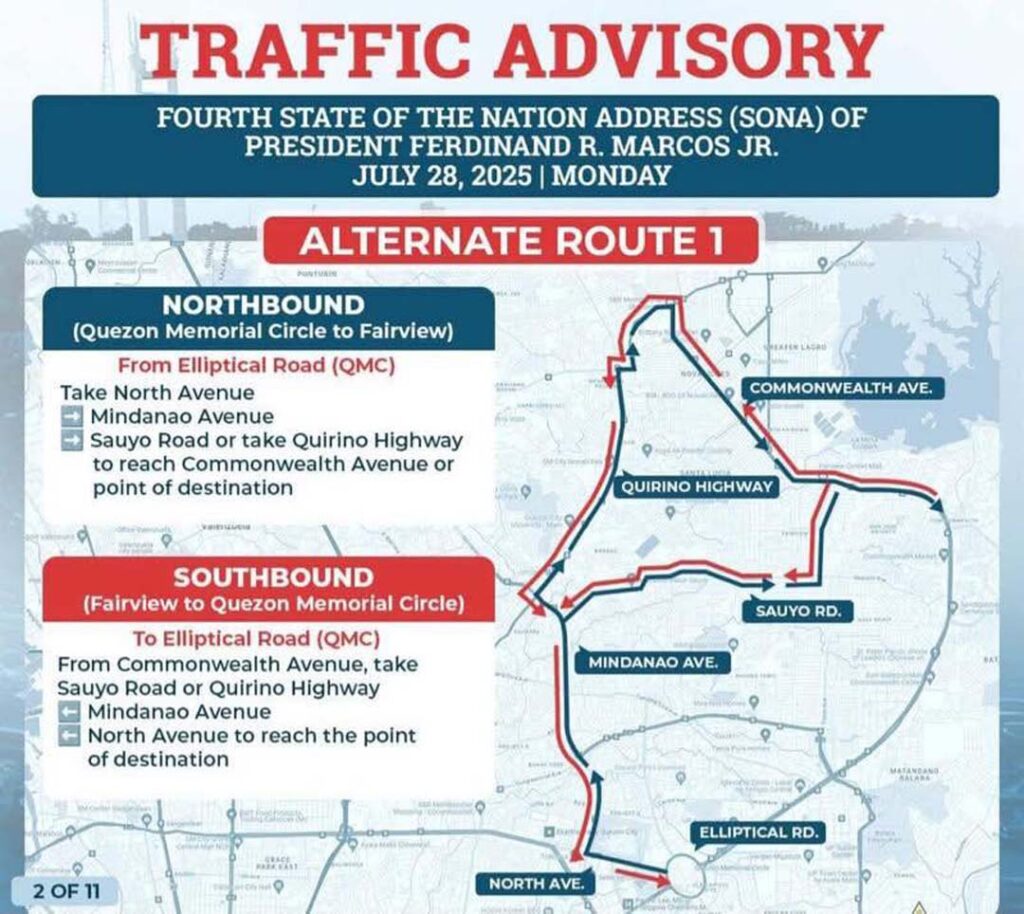
Map Reference: Visual aid shows the detour route in red with labeled roads and landmarks.
To minimize congestion, the MMDA advised motorists to take alternate routes:
- Northbound (Elliptical to Fairview): Use North Avenue → Mindanao Avenue → Sauyo Road or Quirino Highway.
- Southbound (Fairview to QMC): Take Sauyo Road or Quirino Highway → Mindanao Avenue → North Avenue.
- Light vehicles from C5: Divert through Magiting → Maginhawa → Mayaman → Kalayaan Avenue.
- Trucks from C5/Katipunan: Use Luzon Flyover → Congressional Avenue.
The agency also announced an all-hands-on-deck approach. Over 1,300 MMDA personnel will be on-site to manage vehicular and pedestrian traffic, clear obstructions, and respond to any emergencies. A “no-day-off, no-absent” policy is in effect for field teams.
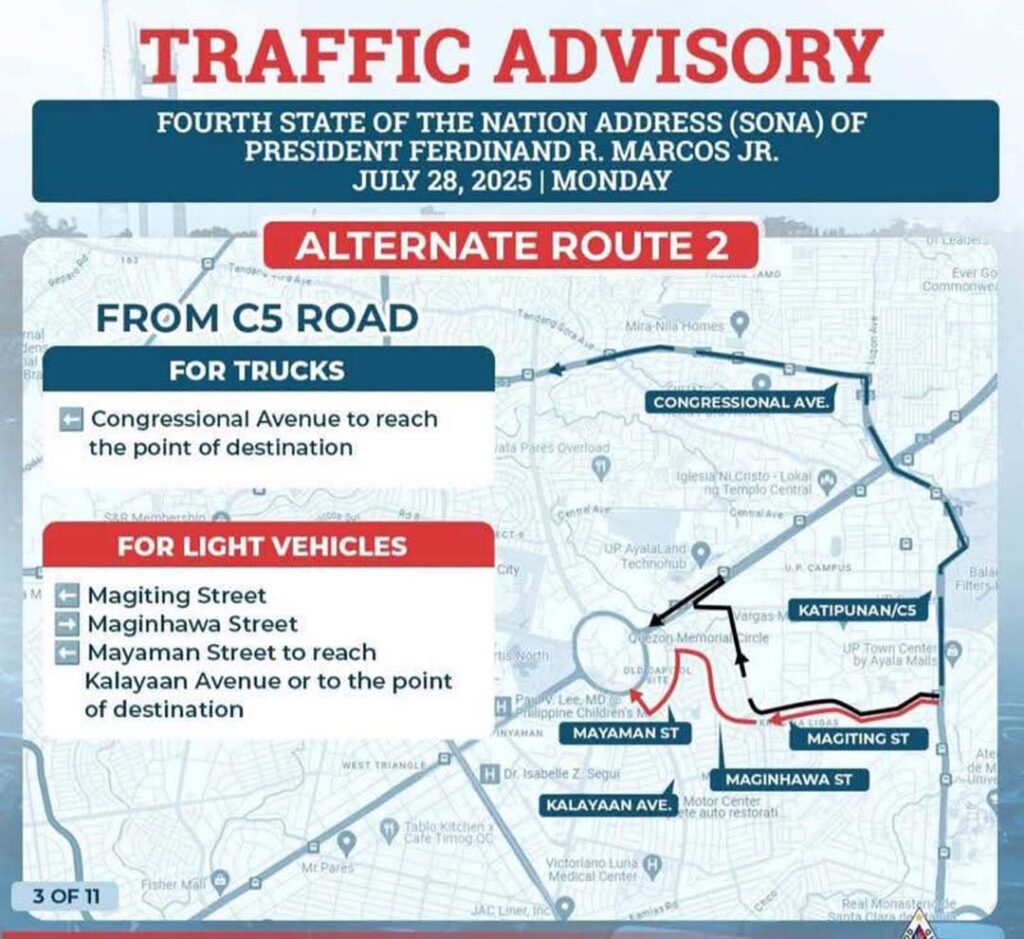
For detailed guidelines for all traffic advisories from MMDA, we created a plan to navigate the roads during the event. The details are in the caption of each of the photos posted on our Facebook page: https://www.facebook.com/share/p/1Ht4aEQtVP/
Command centers will monitor traffic conditions and protest activities via CCTV. Emergency vehicles, patrol units, and road-clearing equipment will be stationed at key points.
Ahead of the big day, MMDA teams have begun sidewalk clearing operations around the Batasang Pambansa, targeting illegally parked vehicles and other obstructions.
While the goal is to ensure a smoother experience for SONA attendees, many commuters are already anticipating longer travel times. In recent years, this kind of setup has sparked mixed reactions from the public—some see it as necessary, others question the impact on daily road users.
What do you think of this approach? Is it effective, disruptive, or somewhere in between? Let us know in the comments.