EV
Tesla Starts Paid Cybercab Rides Without Steering Wheel

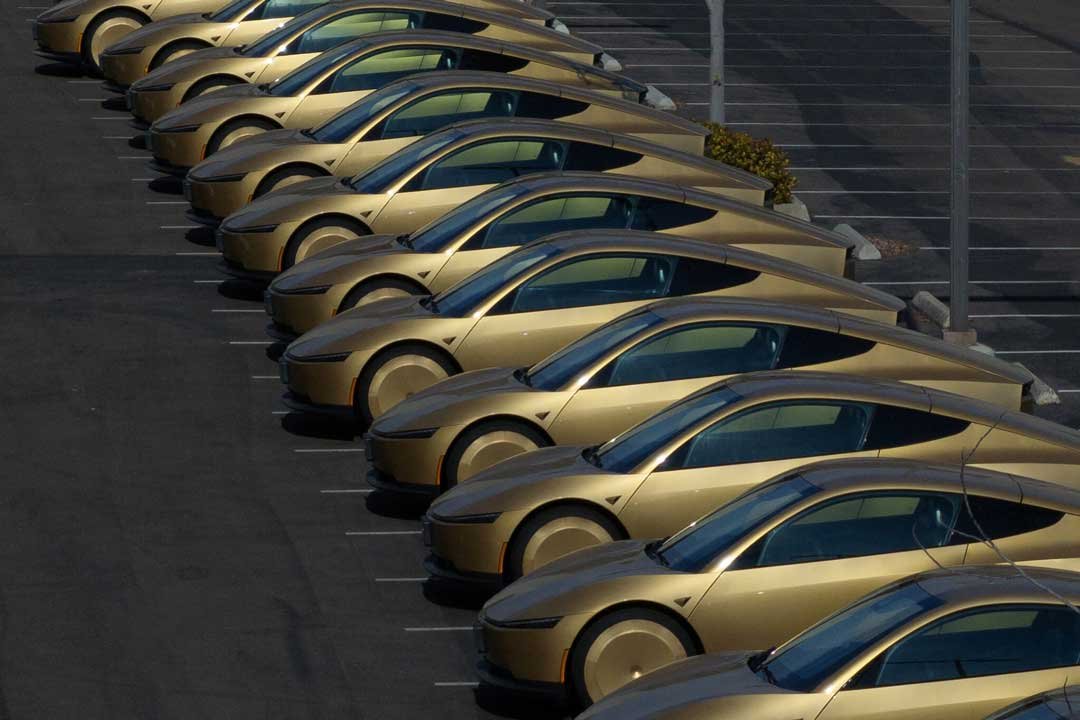
Tesla has begun offering paid rides in its Cybercab, a two-seat autonomous vehicle designed without a steering wheel or pedals.
The electric car marks a major step in chief executive Elon Musk’s long-running plan to build vehicles that can transport passengers without direct human control. Tesla said customers can hail a Cybercab for errands and commuting through its Robotaxi service.
The company said the vehicle can carry two passengers and has space for luggage or other large items such as golf clubs and scooters.
Tesla began producing the Cybercab at its factory in Austin, Texas, in July. However, widespread availability may still be some way off because US regulations were written largely for vehicles equipped with conventional driver controls.
The company unveiled the Cybercab nearly two years ago and said it would cost less than $30,000. It is Tesla’s first entirely new passenger vehicle since the Cybertruck arrived in 2023.
Tesla is expected to operate most of the early units itself through its Robotaxi network. The service currently operates in six US cities, including Austin, Dallas, Houston and Miami.
Many US states require additional approval for vehicles without steering wheels or brake pedals. Some do not yet allow them to operate on public roads.
Tesla has also invited businesses to register their interest in buying Cybercabs for commercial fleets. The move suggests that early buyers may be companies able to provide the maintenance and operational support required by autonomous taxis.
The Cybercab is central to Tesla’s claim that autonomous vehicles will become a major source of future growth. The company is valued at about $1.5 trillion, making it the world’s most valuable carmaker and worth several times more than Toyota.
However, Tesla shares have lost almost 20 percent this year as some investors question whether the company can catch Waymo, the autonomous-driving business owned by Google parent Alphabet.
Waymo already operates about 4,000 autonomous vehicles offering paid rides across 14 US cities.
Investors are now watching how quickly Tesla can increase the number of Cybercabs in commercial service.
Morgan Stanley analysts said investors could be disappointed if the rollout involved only a limited number of vehicles. A wider deployment that significantly increased the Robotaxi fleet could support Tesla’s share price, they added.
Tesla is authorized to operate 314 driverless vehicles carrying paying passengers in Texas, according to the state’s Department of Motor Vehicles. Most are Model Y sport utility vehicles, while 45 are Cybercabs.
It is unclear how many of those vehicles are actively carrying passengers.
Tesla owners can already subscribe to software called Full Self-Driving (Supervised) for $99 a month. The system can handle much of a journey, but a driver must remain ready to take control when needed.
The Cybercab removes that option because it has no conventional driving controls.
Tesla’s authorized autonomous fleet in Texas is smaller than those of some rivals. Waymo has more than 700 vehicles in the state, while Avride operates 344 Hyundai Ioniq 5 units.
Despite their automated operation, robotaxis still depend on human workers. Tesla, Waymo and other operators monitor their vehicles from command centers, where personnel can assist when the software encounters a problem. Workers also handle cleaning and maintenance.
Amazon-owned Zoox is among the few companies already using a purpose-built autonomous vehicle without a driver’s seat. Its compact rectangular vehicle also lacks conventional controls.
US federal regulators granted Zoox permission in July to operate as many as 2,500 of those vehicles on public roads. Tesla would probably need a similar exemption before deploying Cybercabs in large numbers, but it has not yet secured one.
Regulation also varies between states. Texas previously imposed few restrictions on autonomous taxi services but introduced a permit requirement this year.
The change followed complaints from police and emergency responders that some autonomous vehicles failed to recognize hand signals or obstructed their work.
Tesla has not announced plans to offer Cybercab rides in the Philippines. Its first commercial operations remain concentrated in selected US cities, where the company must still navigate different federal and state requirements.