Connect with us

EV

Tiny Patrol Power

Published

on

VinFast’s smallest electric SUV is getting a new public service role in Southeast Asia.

The VinFast VF 3, first positioned as a compact EV for school runs, grocery trips and daily commutes, is now being used by police agencies in the Philippines and Indonesia. The deployments add another use case for the mini electric SUV as local governments and enforcement units look at electric mobility for patrol and support operations.

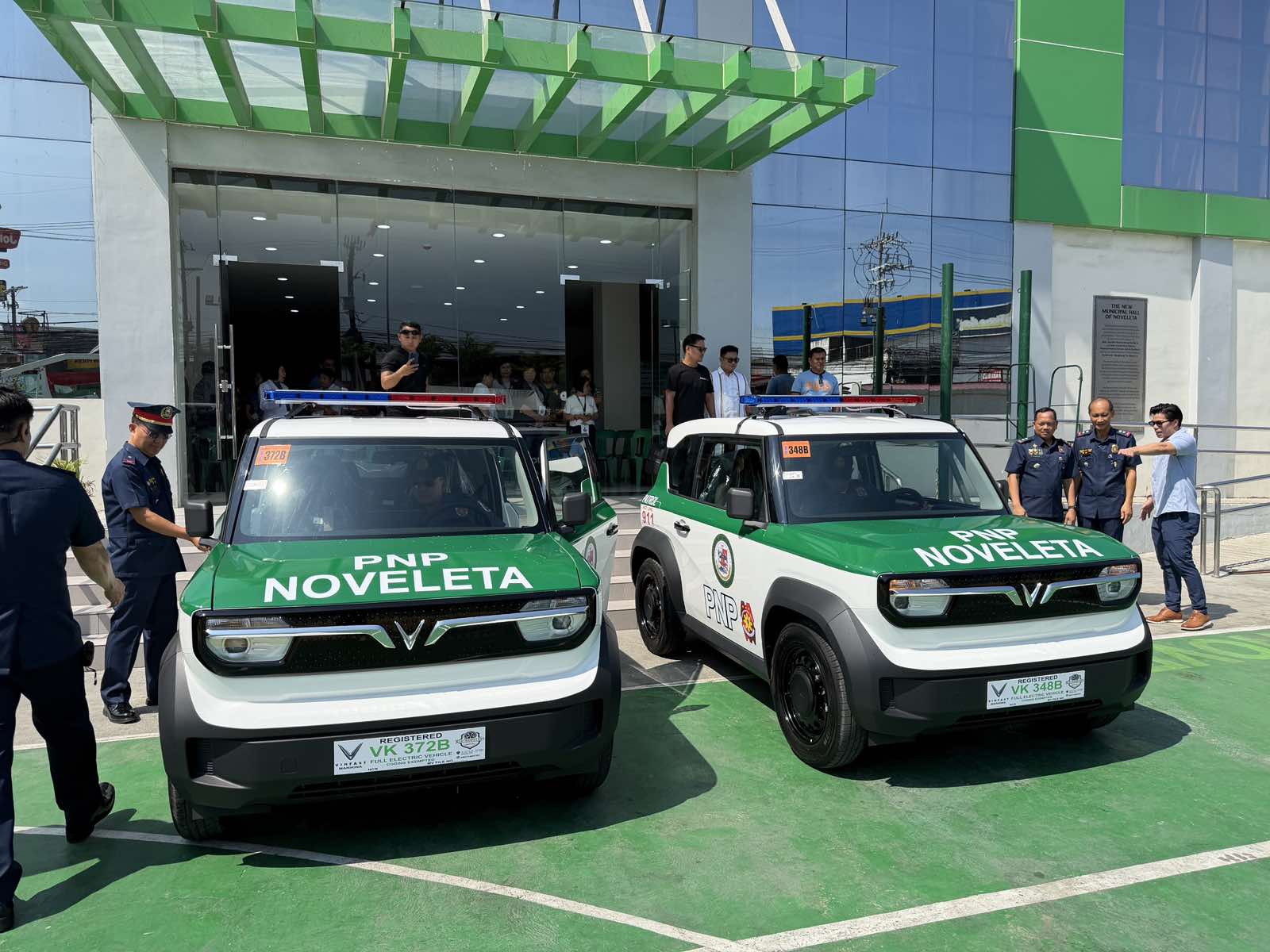
In the Philippines, the Municipality of Noveleta in Cavite has deployed VF 3 units as electric police patrol vehicles. The move forms part of the town’s push for sustainable governance, environmental responsibility and updated public safety operations.

Noveleta is also cited as the first municipality in CALABARZON to adopt EV mobility goals. Its initial VF 3 patrol units were supplied through VinFast Marikina and Xentro, with more units expected later.

The vehicles will support local patrol work while helping cut fuel use and operating costs. For a municipal fleet, the shift shows how EV adoption is moving beyond private buyers and into government service.

In Indonesia, the VF 3 has been assigned to a more specialized task. The National Traffic Police Corps introduced its Precision Drone Patrol ETLE program, which uses drones to monitor traffic and spot violations. A modified VF 3 was chosen as a mobile transport unit for drone equipment.

The rear section of the vehicle was adapted for storage, allowing officers to carry and deploy traffic-monitoring drones from different locations. Its small size also helps officers move through congested streets and operate in areas where larger vehicles may have difficulty.

The VF 3 measures 3,190 mm long, 1,679 mm wide and 1,652 mm high. It has 16-inch wheels, 175 mm of ground clearance and a driving range of up to 215 kilometers on a full charge. Using DC fast charging, its battery can go from 10 percent to 70 percent in around 36 minutes.

VinFast said these traits make the VF 3 useful not only for city drivers, but also for fleets that need low operating costs, easy maneuverability and practical daily use.

The model has also become a strong seller in Vietnam. VinFast delivered 4,770 VF 3 units in May 2026, raising its total VF 3 deliveries to 20,231 units for the first five months of the year.

For the Philippines, the VF 3 is being pitched as an accessible EV with a 7-year or 160,000-kilometer vehicle warranty, a 10-year battery warranty, support from VinFast’s service network and access to the V-Green charging program.

From private errands to patrol duty and drone support, the VF 3 is showing how a small EV can take on bigger work.


Continue Reading
Click to comment

Leave a Reply

Your email address will not be published. Required fields are marked *

EV

Fare Isn’t The Finish

Published

on

Davao City’s ride-hailing conversation is moving beyond fare.

Price still matters when passengers open an app. Availability and convenience still influence the first tap. But among many Davaoeños, the ride that gets remembered is rarely the cheapest one. It is often the one that feels calm, clean and considerate.

That shift has placed hospitality at the center of the commuting experience in the city.

Passengers heading to Francisco Bangoy International Airport, going home after work in Bajada, passing through Kadayawan traffic along Roxas, or meeting friends near Roxas Night Market often describe the same thing in different ways. The ride matters when it makes the trip easier, not just cheaper.

Some remember a driver who waited while a passenger rushed back inside the house for a forgotten passport before an airport trip. Others recall arriving home in Toril or Buhangin during a downpour without having to walk through the rain. There are also passengers who remember help with groceries, a clean cabin after a long day, or a driver who made the trip feel less tiring.

These details are small, but they shape how passengers judge the service.

That has become more visible since Green GSM entered Davao City. Many first-time passengers tried the service out of curiosity because it was their first ride in an electric taxi. The vehicle caught attention first. The experience decided whether they would book again.

Passengers noticed the quieter cabin while waiting at busy areas such as Matina Crossing and Buhangin. Some pointed out the absence of the fuel smell often associated with conventional traffic. Others mentioned the cleanliness of the units and the professional manner of the drivers.

The technology helped introduce the service, but the hospitality gave the ride its value.

In daily use, sustainability does not always sound like a technical idea. It can feel like a quieter trip, cleaner air inside the cabin, and a more comfortable ride through familiar city routes. It can also show up in how passengers are treated from pickup to drop-off.

Davao’s reputation for warmth is now being reflected on the road. For ride-hailing users, a good trip is no longer measured by fare alone. It is also measured by how respected, safe and at ease they feel when they arrive.

As the city continues to grow, more passengers may start to expect that kind of service from every ride.

Continue Reading

EV

Charging The Route

Published

on

ACMobility, Basic Energy expand EV charging for public transport

ACMobility and Basic Energy Corporation (BEC) are expanding their partnership to build more electric vehicle charging hubs for public transport fleets in the Philippines.

The tie-up supports Basic Energy’s Iwas Taas Pamasahe Transport Solutions Program, which allows transport groups to use electric buses without upfront payment and own the vehicles after five years.

The program is designed to help operators shift to electric mobility while reducing exposure to fuel price changes that can affect commuter fares.

ACMobility, the Ayala Group’s mobility platform and EV charging solutions provider, will build charging hubs along key routes for electric buses and private EVs.

The partnership will support the deployment of the Love E-Bus fleet. ACMobility said the charging network will help keep electric buses operational by improving access to charging along major routes.

Carla Buencamino, head of mobility infrastructure at ACMobility, said public transport must be included in the country’s shift to electric mobility.

Basic Energy president and chief executive officer Oscar De Venecia Jr. said the partnership supports the company’s goal of providing sustainable and accessible transport options.

The next charging hub under the partnership will be located at the Total station on the northbound side of the South Luzon Expressway. It will have DC fast chargers for quicker turnaround and AC chargers for longer charging stops.

The partners are also looking at sites in Mandaluyong City, Cainta, Barangka in Marikina and Sumulong Highway. These locations are expected to improve charging access across commuter routes in eastern Metro Manila.

Other planned locations include E. Rodriguez and Visayas Avenue in Quezon City, Newport City in Pasay City and EDSA.

ACMobility and Basic Energy earlier opened EV charging hubs at EcoOil Alabang and the Total station on the North Luzon Expressway.

ACMobility said its EV charging network now covers more than 200 locations nationwide. The company is also developing digital services that will help users access charging stations and service centers.

Continue Reading

Cars

Seven-Seat Shift

Published

on

VinFast Philippines is taking a two-track approach to the local multi-purpose vehicle (MPV) market with the VF MPV 7 and VF Limo Green, targeting both private families and high-use transport operators.

The two electric seven-seaters enter a segment long built around space, practicality and affordability. VinFast is adding a different angle by pairing electric mobility with ownership programs meant to lower entry costs and ease long-term concerns around batteries, charging and resale value.

The VF MPV 7 is positioned for families that need one vehicle for several daily roles. In many Filipino households, a seven-seater moves from school runs and errands to weekend trips and family gatherings. VinFast is pitching the model as a more flexible family vehicle, with emphasis on usable space, comfort and refinement.

The VF Limo Green, meanwhile, is aimed at transport services and business operators. Its role is more direct. It is built for daily use, high mileage and passenger operations where fuel, maintenance and downtime affect earnings.

Electric power changes part of that cost structure. VinFast is offering the Limo Green as a practical option for operators looking for lower running costs and more predictable expenses compared with conventional fuel-powered MPVs.

The vehicles are supported by VinFast’s battery subscription model, which separates the battery from the vehicle purchase. According to the brand, this can reduce the initial cost by up to around 20 percent while shifting battery performance and maintenance responsibility to VinFast through a monthly fee.

VinFast is also offering a Residual Value Guarantee program that gives customers value protection of up to 90 percent of the vehicle’s original price under defined conditions. Resale value remains a major concern for many buyers moving to electric vehicles, especially in a market where EV adoption is still developing.

Charging support is also part of the strategy. Through V-Green, VinFast is expanding charging access and offering free charging until March 2029. The brand is also combining this with financing options, aftersales support and service coverage.

VinFast Philippines also introduced RENTAPASADA during the 2026 Philippine International Motor Show (PIMS). The vehicle-rental program gives drivers access to VinFast electric vehicles, including the Limo Green, through Green GSM’s platform for ride-hailing and transport-service operations.

Rhomel Franco, chief executive officer of VinFast Philippines, said the brand wants electric mobility to work beyond showroom sales.

“With the VF MPV 7 and the VF Limo Green, supported by an expanding ecosystem, we are enabling a more practical and accessible transition to electric vehicles in the Philippines,” Franco said.

VinFast’s MPV push places the brand in two active parts of the market at once. One side wants a family seven-seater with lower long-term ownership concerns. The other needs a work vehicle that can control operating costs.

Together, the VF MPV 7 and VF Limo Green give VinFast a wider entry point into a segment where space is no longer the only selling point.

Continue Reading

Trending